It’s not that I’m neglecting this blog; it’s that I’m more often engaged in creative ways that are not writing, and I’m simply using the shell of this blog as a platform to promote these other things.
I started Singing Mountain, a podcast about video game music a few weeks ago. It’s an experiment, and I’m not sure exactly what form it will take. It may change episode to episode, based on my whims and availability, but I can tell you at least that it will always be about why the background music from whatever game you barely remember is actually more important than you might have realized.
I posted the fourth episode of Singing Mountain yesterday. It’s actually a remake, of sorts, of a post that went up here back in 2012. Once I started this thing, I realized that a podcast actually was the better medium through which to tell the story, just because you can exert a little more control over your audience than you can with just text. Topics discussed in this fourth episode include Earthbound, the closet where my mom would hide Christmas presents, The Cars, Salvador Dali’s “The Persistence of Memory,” the actual persistence of memory, the litigiousness of Beatles and, finally, Janet Jackson. It will likely prove to be the exception more than the rule, as far as future episodes go, as this one is also about me. I was interested if I could use this sort of podcast as a means to make creative nonfiction, I guess, and I’m eager to hear what you think of the result.
If you’re interested, you can subscribe to Singing Mountain both on SoundCloud and on iTunes. And if you’re curious, you can also listen to my previous three episodes, which cover Super Mario RPG, the Mega Man series and the work of German composer Chris Huelsbeck.
In case you’re wondering, the logo art uses a slightly re-colored version of the Dragon’s Hole dungeon background art from Seiken Densetsu 3. And please — if you’re so inclined, write me a review on iTunes. As a podcast person, I’m required to ask you that.

Showing posts with label music. Show all posts
Showing posts with label music. Show all posts
Thursday, July 6, 2017

Saturday, April 22, 2017
1984’s Best Song About Being Ejaculated Upon
Here, please watch the video for Vanity’s 1984 pop song “Pretty Mess,” which is not just sexual in nature but unusually specific in the type of sex it seems to be celebrating. Have a look and listen for yourself.
“Pretty Mess” is not a good song, exactly, but you have to admit it’s efficient in communicating its message. if there were any doubts about what Vanity is singing about, those would be tidily removed by the video, which manages at least six metaphors for genitalia and the substances that come out of genitalia. These metaphors are as follows:
I’d imagine that if you were in your car listening to the radio during the few weeks “Pretty Mess” would have been getting airplay back in 1984 and you were just hearing the lyrics, you might ask yourself, “Wait, is she singing about getting jizzed on?” But if you were watching the video, the message would be clear: Yes, she really is singing about getting jizzed on. I liken it to Grace Jones’ 1981 track “Pull Up to the Bumper,” which seems like it’s about having sex with a guy with a big black dick but which Jones herself insists is not the case. It’s maybe even funnier for Jones to pretend that she just made a song about parking a car, but the video at least keeps it ambiguous: It’s just Grace Jones dancing onstage, superimposed on images of traffic.
Not that there’s anything wrong with writing and performing a song about getting ejaculated upon, I suppose.
People who have been reading this blog for a while might remember that I wrote about “Pretty Mess” before. However, since that posting, the video disappeared from the internet. I’m posting this today because I finally found the video again but also because looking back on the original post, I hate the way I talked about this song. The post title was “‘Pretty Mess’ Is a Filthy Song for Prostitutes,” and I was implying that Vanity shouldn’t have made this song. If I thought this back then, I no longer think so now. I love that she made this song, bad as it is, and I think we can celebrate it in the context of “Wow, can you believe this song got made? Can you believe she got away with this video?” And it’s all the more notable when you consider that “Pretty Mess” was Vanity’s first solo single after dropping out of Vanity 6, the girl group assembled by Prince and the group responsible for the 1982 hit “Nasty Girl.” As Prince was wont to do, he gave Vanity her stage name, though it the context of this song, it’s notable to point out that she told People in 1984 that he initially wanted to dub her “Vagina.” Even considering how forthright sexuality was a part of Vanity’s persona since the beginning of her music career, “Pretty Mess” still seems remarkable in how blatantly it discusses the matter at hand. (Or you know, at other body parts.)
So please, pop singers of the future, if you feel inclined to write further songs about being ejaculated upon, feel free to do so. It doesn’t seem like a tall order to make a jizz-positive song that’s better than this one.
Miscellaneous notes:

Bonus video tidbit: Speaking of Prince muses who have surprisingly literal music videos, have you ever seen the video for Sheena Easton’s “Morning Train”? It's more or less what you might expect until you realize that the dude she’s singing about is actually the train conductor. He takes the train because his job is driving the train.
That’s... weird, right?
“Pretty Mess” is not a good song, exactly, but you have to admit it’s efficient in communicating its message. if there were any doubts about what Vanity is singing about, those would be tidily removed by the video, which manages at least six metaphors for genitalia and the substances that come out of genitalia. These metaphors are as follows:
- at 1:06, Vanity getting showered in white feathers
- at 1:26, the female bartender dripping honey all over the counter
- at 2:04, Vanity getting showered with champagne that’s gushing out of the bottle
- at 2:37, Vanity attempting to catch a white throw pillow (and notably failing to catch it)
- at 3:02, Vanity dancing at the rear of a long, arguably flesh-colored hallway while singing “and then he found a hallway that went all the way”
- at 3:08, Vanity and her male companion getting showered in white confetti
I’d imagine that if you were in your car listening to the radio during the few weeks “Pretty Mess” would have been getting airplay back in 1984 and you were just hearing the lyrics, you might ask yourself, “Wait, is she singing about getting jizzed on?” But if you were watching the video, the message would be clear: Yes, she really is singing about getting jizzed on. I liken it to Grace Jones’ 1981 track “Pull Up to the Bumper,” which seems like it’s about having sex with a guy with a big black dick but which Jones herself insists is not the case. It’s maybe even funnier for Jones to pretend that she just made a song about parking a car, but the video at least keeps it ambiguous: It’s just Grace Jones dancing onstage, superimposed on images of traffic.
Not that there’s anything wrong with writing and performing a song about getting ejaculated upon, I suppose.
People who have been reading this blog for a while might remember that I wrote about “Pretty Mess” before. However, since that posting, the video disappeared from the internet. I’m posting this today because I finally found the video again but also because looking back on the original post, I hate the way I talked about this song. The post title was “‘Pretty Mess’ Is a Filthy Song for Prostitutes,” and I was implying that Vanity shouldn’t have made this song. If I thought this back then, I no longer think so now. I love that she made this song, bad as it is, and I think we can celebrate it in the context of “Wow, can you believe this song got made? Can you believe she got away with this video?” And it’s all the more notable when you consider that “Pretty Mess” was Vanity’s first solo single after dropping out of Vanity 6, the girl group assembled by Prince and the group responsible for the 1982 hit “Nasty Girl.” As Prince was wont to do, he gave Vanity her stage name, though it the context of this song, it’s notable to point out that she told People in 1984 that he initially wanted to dub her “Vagina.” Even considering how forthright sexuality was a part of Vanity’s persona since the beginning of her music career, “Pretty Mess” still seems remarkable in how blatantly it discusses the matter at hand. (Or you know, at other body parts.)
So please, pop singers of the future, if you feel inclined to write further songs about being ejaculated upon, feel free to do so. It doesn’t seem like a tall order to make a jizz-positive song that’s better than this one.
Miscellaneous notes:
- Ten years after “Pretty Mess,” Vanity overdosed and nearly died. She subsequently converted to born-again Christianity and cut all ties with the music industry. In Matthew Rettenmund’s book Totally Awesome 80s, Vanity is quoted as saying, “When I came to the Lord Jesus Christ, I threw out about 1,000 tapes of mine—interview, every tape, every video, everything.”
- I don’t know if it’s even possible, but I wonder if her decision to distance herself from her music career had something to do with the “Pretty Mess” video suddenly becoming unavailable online. For a few years, you just could not find this video, when it was easy to find before that. This struck me as weird. “Pretty Mess” was a Motown Records release that did kinda-sorta okay on the Billboard charts, after all, and it’s odd to have a video for a major release such as this just vanish. I’d periodically look for it—often propelled to do so after exclaiming something along the lines of “Oh my god, you have to see the video for this song”—and it has only returned following Vanity’s death in February 2016. At the very least, I can hope that other people looking for it end up here.
- Another explanation for its unavailability online? It’s just not that great of a song. At several points during the song, Vanity sounds like Miss Piggy in heat, and I apologize if me pointing this out damages your mental image of Miss Piggy.
- Pop songs about ejaculation seem to be rare, and those about ejaculate specifically even more so.
- I’m unclear whether Vanity wrote “Pretty Mess.” The Wikipedia page credits her as the sole writer, while the page for the album Wild Animal credits Bill Wolfer. I like the song more if I think that she chose to write and perform it herself, rather than some man handing it to her and saying, “It’s a song about spooge. You’re singing it now.”
- Vanity plays the female lead in Enter the Dragon, but her acting career began before Prince’s involvement in her life. Notably, she play, the girl in the sexy Egyptian girl costume in the 1980 Jamie Lee Curtis slasher Terror Train, which means that she and David Copperfield share a movie credit. (She’s credited as D.D. Winters, though she was born Denise Katrina Matthews.)
- I can’t tell if Vanity is also playing the female bartender into the video or if the actress cast just looks like her. Anyone?
- Vanity’s love interest in the video suggests a hypothetical love child created by Limahl and a lesbian New Wave amazon.

Bonus video tidbit: Speaking of Prince muses who have surprisingly literal music videos, have you ever seen the video for Sheena Easton’s “Morning Train”? It's more or less what you might expect until you realize that the dude she’s singing about is actually the train conductor. He takes the train because his job is driving the train.
That’s... weird, right?
Tuesday, February 21, 2017
All the Colors of the Night
“No, I don’t know why.”
That’s the response that would probably come first if someone asked me what motivated me to make this new video project. But if I thought about it a little, I might come up with something along the lines of this: “Not that I need a reason, you sniveling jerk, but I feel like a nearly lifelong love of horror movies and weird ’80s music is reason enough.”
That gets pretty much to the point of my second video project, which I’m calling “All the Colors of the Night” and which you can watch in full below.
Heads up: This project contains boobs and butts and some blood, and it’s therefore NSFW, unless your work is cool about typical horror movie fare. If you’re squeamish about violence, know that there’s nothing excessively graphic, but these are horror movies I’m working with, for the most part, so there’s a certain base level of bodily violence that should be expected.
My previous video project came out of nowhere, really, because I’d been pretty much only words up until that point, and while I’m happy I did it, I now feel like it’s mostly a messy and unstructured thing. I felt like I wanted to give it another shot and make something a bit more orderly. You can judge for yourself whether I achieved this. Regardless, I liked wrapping up a bunch of horror movies (and thereabouts) in colorful dressing and setting them to ’80s Euro pop (and thereabouts), and I hope you do too.
A few notes:
And here is the list of source materials, in the order they appear, in case you’re trying to place a given song or movie.

That’s the response that would probably come first if someone asked me what motivated me to make this new video project. But if I thought about it a little, I might come up with something along the lines of this: “Not that I need a reason, you sniveling jerk, but I feel like a nearly lifelong love of horror movies and weird ’80s music is reason enough.”
That gets pretty much to the point of my second video project, which I’m calling “All the Colors of the Night” and which you can watch in full below.
Heads up: This project contains boobs and butts and some blood, and it’s therefore NSFW, unless your work is cool about typical horror movie fare. If you’re squeamish about violence, know that there’s nothing excessively graphic, but these are horror movies I’m working with, for the most part, so there’s a certain base level of bodily violence that should be expected.
My previous video project came out of nowhere, really, because I’d been pretty much only words up until that point, and while I’m happy I did it, I now feel like it’s mostly a messy and unstructured thing. I felt like I wanted to give it another shot and make something a bit more orderly. You can judge for yourself whether I achieved this. Regardless, I liked wrapping up a bunch of horror movies (and thereabouts) in colorful dressing and setting them to ’80s Euro pop (and thereabouts), and I hope you do too.
A few notes:
- I tried to make it so it looks good either on a computer monitor or a TV screen.
- Please watch the credits.
- Please watch for patterns.
- I do acknowledge that the vast majority of characters appearing in this project are white people. I will blame that on the genre as it existed back in the day. I did my best to offer Geretta Geretta prominent placement.
- I also acknowledge that a disproportionate number of victims of violence in this are female. I will again blame this on the genre as it existed back in the day.
- I honestly love all of the movies and songs I included in this project, and in case anyone wants to point out that I am essentially using them all without permission, I’d like to clarify that I don’t intend to make a dime off this project and I consider it a remix—just one that blends video and music in a way that doesn’t exist online elsewhere and that does not intend to take the place of the original film or songs.
- I started this project the day before Halloween and finished it on Valentine’s Day, meaning that the world seems a lot different now than it did beforehand. I will hold back on making any grand metaphors, but I did this because I wanted to try take movies that people might think of as scary or weird or dark and focus on the parts that make them beautiful. You can find nice moments even when things are scary, I guess.
- The title comes from a 1972 Edwige Fenech film All the Colors of the Dark, which was released in the U.S. as They’re Coming To Get You and Day of the Maniac. I like my version of the title better.
- The three through-lines between the first project and the second are, apparently, Dario Argento’s Inferno and Dorine Hollier’s “Tonight! (Crazy Night!)” and the Bollywood version of A Nightmare on Elm Street. Regarding that last one, I made a handy ten-minute supercut of it that you can watch here.
- No, that really is Mia Farrow’s little sister.
- No, that isn’t actually Shelley Winters.
- I did actually make a little trailer for this project, and none of it appears in the final project. Watch, if your want, below.
And here is the list of source materials, in the order they appear, in case you’re trying to place a given song or movie.
- Intro: Suspiria + “Seconds” by Human League
- Part one (“Green Goblin”): Demons + “Tonight! (Crazy Night)” by Dorine Hollier
- Part two (“Blue Boy”): A Nightmare on Elm Street 2: Freddy’s Revenge + “Right on Target” by Paul Parker
- Part three (“Red River”): House/Hausu + “Crazy” by Daydream
- Part four (“Italian Purple”): Blood and Black Lace + “Jamie” by Mistral — and for the love of God please watch the original video for “Jamie,” as it will make your life immeasurably better and worse for having seen it
- Part five (“Golden Dream”): Mahakaal (plus a little of A Nightmare on Elm Street and Nightmare on Elm Street 4) + “Don’t Stop” by Gigamesh featuring Jana Nyberg
- Part six (“Aquatic Ambiance”): Zombi 2 + “Aquatic Ambiance” by David Wise
- Part seven (“Strawberry Skies”): Night of the Comet + “Strawberry Skies” by Games featuring Laurel Halo
- Part nine (“Bloody Silver”): Profondo Rosso, Suspiria, Tenebre and Inferno + “Slice Me Nice” by Fancy
- End credits: “Seconds” by Human League + “Kraken of the Sea” by Keiichi Suzuki

Wednesday, September 7, 2016
Be Kind
I guess we can blame Stranger Things for this—well, what I’m talking about below plus a hundred thousand memes about Barb.
Back in July, I wrote here about how much I liked Stranger Things because it re-created a lot of the entertainment I liked so much when I was a kid, save for one key thing. The show’s reconstituted Spielbergian wonder looked too good. It was missing the TV static and VHS distortion that came with all that culture, at least for me way back when. See, I grew up beyond city limits, beyond where the cable TV cable could reach, and as a result, most of what I watched came to me hissing and fuzzy, but not in the cat way. As an experiment, I tried to add these elements back in, and for reasons I can’t explain, I kept doing it—for most of the summer, in fact. You might have noticed clips popping up here and there on my social media.
The result is what you see below, a project I’m just calling “Rewind.” It’s kind of a music mix, kind of a montage, kind of a string of music video-like things but punctuated with vintage commercials. I think I was trying to create a little pocket universe of culture from the ’80s and thereabouts. It never all quite existed this way, but it’s fun to pretend it did.
Or at least I thought so. Maybe you will think so too.
Yeah, I realize it’s two hours long. That was kind of the point, to make something that you could just lose yourself in—maybe keep on in the background and listen to and periodically check into and see something colorful and weirdly familiar, even if you’d ever actually seen it before. Or you could just pick a random point on the timeline and click and not know what nostalgic thing you’d end up seeing.
Again, I don't know why I felt compelled to make it, but I hope at the very least that you walk away with a song you like or some weird bit of pop culture that had somehow bypassed you before—maybe even see how some of the pairings of video chunks and old songs weren’t entirely random.
If nothing else, I hope the image of Grace Jones, eyes glowing with a demonic energy as she tries to sell you wine coolers, is forever burned into your memory. You’re welcome in advance!

Hit the jump to see a list of video and audio sources, plus most of the music video-like clips posted solo.
In order:
Outrun + Trans X
Fisto + “Cara Mia”
Cho Aniki + “Happy Station”
Inferno + “Disco Band”
“Tonight! Crazy Night” by Dorine Hollier
The opening credits to Chopping Mall
Aneka + Tangerine Dream
“Madam Butterfly” by Malcolm McLaren
Kraftwerk on The New Dance Show
Beverly Hills Teens + Clio
Neo Geo fighters + Book of Love
Night of 100 Stars + Via Verdi
Mahakaal + Giusy Dej
Final Fight + “Dance It Down”
Saint Seiya + Baby’s Gang
Prom Night + Survive
The Nutcracker Suite + Blue Russell
And finally here are all the commercials, in case that’s your thing
Back in July, I wrote here about how much I liked Stranger Things because it re-created a lot of the entertainment I liked so much when I was a kid, save for one key thing. The show’s reconstituted Spielbergian wonder looked too good. It was missing the TV static and VHS distortion that came with all that culture, at least for me way back when. See, I grew up beyond city limits, beyond where the cable TV cable could reach, and as a result, most of what I watched came to me hissing and fuzzy, but not in the cat way. As an experiment, I tried to add these elements back in, and for reasons I can’t explain, I kept doing it—for most of the summer, in fact. You might have noticed clips popping up here and there on my social media.
The result is what you see below, a project I’m just calling “Rewind.” It’s kind of a music mix, kind of a montage, kind of a string of music video-like things but punctuated with vintage commercials. I think I was trying to create a little pocket universe of culture from the ’80s and thereabouts. It never all quite existed this way, but it’s fun to pretend it did.
Or at least I thought so. Maybe you will think so too.
Yeah, I realize it’s two hours long. That was kind of the point, to make something that you could just lose yourself in—maybe keep on in the background and listen to and periodically check into and see something colorful and weirdly familiar, even if you’d ever actually seen it before. Or you could just pick a random point on the timeline and click and not know what nostalgic thing you’d end up seeing.
Again, I don't know why I felt compelled to make it, but I hope at the very least that you walk away with a song you like or some weird bit of pop culture that had somehow bypassed you before—maybe even see how some of the pairings of video chunks and old songs weren’t entirely random.
If nothing else, I hope the image of Grace Jones, eyes glowing with a demonic energy as she tries to sell you wine coolers, is forever burned into your memory. You’re welcome in advance!

Hit the jump to see a list of video and audio sources, plus most of the music video-like clips posted solo.
In order:
- Vintage distribution company logos (original)
- Friday Night Videos intro, 1985 (original)
- Video for “I Want It To Be Real” by John Rocca, 1984 (original)
- Commercial for Super Mario Bros. 2, 1988 (original)
- “Living on Video” by Trans X, 1983 (original) + playthrough of Outrun (original)
- Commercial for Shasta, 1983 (original)
- “Pretty Face” by Styloo (original) + Sym-Bionic Titan episode “Tashy 497,” 2010 (original)
- Commercial for Mentos, 1994 (original)
- “You Are Young,” by C.C. Catch, 1986 (original)
- Commercial for Ironsword: Wizards and Warriors II and Double Dragon II, 1990 (original)
- “Cara Mia,” by Annie, 2015 (original) + the He-Man and the Masters of the Universe episodes “Fisto’s Forest,” “To Save Skeletor,” and “The Rarest Gift of All”
- Commercial for Commerce Union Bank, 1973 (original — and please click this, because it’s from a pre-KCET Huell Howser show which is a spectacle in its own right)
- Instrumental version of “Be My Lover Now,” by Giorgio Moroder and Philip Oakey (original) + vintage footage of Los Angeles in the 1980s (original)
- Commercial for Magnavox Odyssey, undated but maybe from 1978 (original)
- Opening animation from Daicon IV, 1983 (original — the song is “Twilight” by Electric Light Orchestra, but that was original to the clip)
- Commercial for Levi’s 501 jeans, 1985? (original)
- “Happy Station,” by Fun Fun, 1984 (original) + playthrough of Ai Cho Aniki (original)
- Commercial for Fruitopia, 1994 (original)
- “Tonight! Crazy Night,” by Dorine Hollier, 1984 (original)
- Commercial for Pure Agree shampoo, 1980-something (not the original, still trying to find that file, but you get the point)
- “Disco Band,” by Scotch (original) + underwater scene from Dario Argento’s Inferno (original)
- Commercial for The Terminator, 1984 (original)
- Intro to Chopping Mall, 1986 (original)
- Commercial for Whatchamacallit candy bar, 1990-something (original)
- “Exit,” by Tangerine Dream (original) + the video for “Ooh Shooby Doo Doo Lang,” by Aneka, 1982 (original)
- Commercial for Vanderbilt perfume, 1989 (original)
- Video for “Madam Butterfly,” by Malcolm McLaren, 1984 (original)
- Commercial for Sea Breeze with Elle McPherson, 1986 (original)
- “Eyes” by Clio (original) + the intro to Beverly Hills Teens (original) + episodes from the show that you can watch here, here, here, here and here
- Commercial for Arrid Extra Dry with Brooke Shields, 1985 (original)
- “Numbers” by Kraftwerk, 1981 (original) as seen on The New Dance Show, 1981? (original)
- Commercial for Jill doll with Jenny Lewis, 1987 (original)
- “Boy” by Book of Love, 1986 (original) + clips from playthroughs of Fatal Fury 2 (original), Art of Fighting 2 (original), Samurai Shodown (original), World Heroes 2 (original and another original), Samurai Shodown II (original and another original), King of Fighters ’96 (original), Real Bout Fatal Fury (original) and Aggressors of Dark Kombat (original)
- Commercial for Sun Valley wine coolers with Grace Jones, 1987 (original)
- “Diamond” by Via Verdi, 1986 (original) + the fashion show segment from ABC’s Night of 100 Stars, 1982 (original)
- Commercial for Chunky candy bar, 1980-something (original)
- Music video for “Love Resurrection” by Alison Moyet, 1984 (original)
- Commercial for Dubonnet with Pia Zadora, 1980-something (original)
- “My Little Japanese Boy” by Baby’s Gang, 1986 (original) + clips from Saint Seiya / Knights of the Zodiac that you can see here, here, here, here and here
- Commercial for the TV movie The Nightman, 1992 (original)
- “Follow Me” by Giusy Dej, 1980-something (original) + the disco sequence from the Bollywood Nightmare on Elm Street remake Mahakaal, 1993 (original but also do please see the rest of this bizarre gem here)
- Commercial for Fruitopia featuring music by Kate Bush, 1994 (original)
- “Dance It Down” by The Pool, 1983 (original) + a playthrough of Final Fight (original)
- “A.H.B.” by Survive, 2016 (original) + the disco sequence from Prom Night, 1980 (original)
- “Puppet Strings” P.S.A. by the Partnership for a Drug-Free America, 1995 (original)
- “I Want to Fly Away” by Blue Russell, 1984 (original) + clips from The Nutcracker Fantasy, 1979 (non-destroyed version of this clip and also an extended look at the Ragman, should you be interested)
- “Stickerbush Symphony” from Donkey Kong Country 2, 1995 (original) + the closing credits to Soapdish, 1991 (original)
Outrun + Trans X
Fisto + “Cara Mia”
Cho Aniki + “Happy Station”
Inferno + “Disco Band”
“Tonight! Crazy Night” by Dorine Hollier
The opening credits to Chopping Mall
Aneka + Tangerine Dream
“Madam Butterfly” by Malcolm McLaren
Kraftwerk on The New Dance Show
Beverly Hills Teens + Clio
Neo Geo fighters + Book of Love
Night of 100 Stars + Via Verdi
Mahakaal + Giusy Dej
Final Fight + “Dance It Down”
Saint Seiya + Baby’s Gang
Prom Night + Survive
The Nutcracker Suite + Blue Russell
And finally here are all the commercials, in case that’s your thing
Sunday, July 12, 2015
If Everybody Wants You, Why Isn’t Anybody Calling?
Listening to Laura Branigan’s “Gloria” is like being trapped at lunch with a friend who is so focused on criticizing some extraneous person that you begin to wonder about the nature of the obsession. “You’ve been going on and on about this Gloria person. Are you sure you actually don’t like her?” you ask at long last. “I think you’re in love with her.” Your friend puts down her fork. Your insight was not appreciated.
So that, only you can dance to it.
I’ve actually been wondering what Gloria’s deal was for a while now. It’s been eight years since I posted about the strange lyrics on this blog, and it took me until this week to find out why this song exists.
Here’s the story.
The song was initially released in 1979. Sung in Italian by Umberto Tozzi, this version of “Gloria” is a straightforward love song about a man infatuated with a woman who may be imaginary but whom he nonetheless misses “in the air,” “like salt” and “more than the snow melts the sun,” at least according to this translation .
Jonathan King translated the lyrics into English later that same year. Tozzi later re-recorded this version as well.
Eventually Laura Branigan decided she too should record a version, but simply re-using Jonathan King’s translation proved doubly difficult. Had she just kept the subject of the song as is — this alluring woman named Gloria — it would have skewed too sapphic for mainstream pop in the early ’80s. And simply substituting all the references to Gloria with a man named Mario didn’t have the same impact. Thus, Branigan and a collaborator re-wrote “Gloria” as essentially a hate song, with the narrator calling out the subject for living life bigger than she should.
(Note on the Gloria-Mario business: The Wikipedia page on the matter cites People Weekly as the source of this info, but I can’t find the article, and a search of the People.com archives, if that’s the publication it’s trying to refer to, turns up nothing. However, the search did lead me to a 1983 article that refers to Branigan’s gay following as “the AIDS circuit,” and that is certainly something that helps us see where were are as a society now versus thirty years ago.)
The song broke records on the Billboard Top 100, so clearly these creative decisions helped it connect with American audiences, but isn’t that an odd solution to the problem? “We have this catchy song, and we don’t want to our girl to sound like a lesbo, so let’s just have her be obsessively critical about this Gloria bitch?” Lyrics such as “Feel your innocence slipping away / Don’t believe it’s coming back soon” seem intended more to hurt than help, but I suppose constructive criticism hasn’t ever been a big theme in pop music. Of course, today, Branigan would have just covered the song as is, and no one would have blinked an eye about her singing a love song about a woman.

That’s the explanation. In case you’re ever along for the ride, listening to “Gloria” and someone points out how odd the lyrics are, offer them this background, even if it doesn’t completely explain why Gloria is living under an alias. (Spies? Spies!) Personally, I want someone to write Gloria: The Movie and further flesh out the world of sin and scandal that this woman has descended into, a la the movie adaptation of “Ode to Billy Joe.”
And speaking of that, is it strange to anyone else thatthere’s not been a movie version of “The Night the Lights Went Out in Georgia”? Doy, there totally was a Night the Lights Went Out in Georgia movie.
So that, only you can dance to it.
I’ve actually been wondering what Gloria’s deal was for a while now. It’s been eight years since I posted about the strange lyrics on this blog, and it took me until this week to find out why this song exists.
Here’s the story.
The song was initially released in 1979. Sung in Italian by Umberto Tozzi, this version of “Gloria” is a straightforward love song about a man infatuated with a woman who may be imaginary but whom he nonetheless misses “in the air,” “like salt” and “more than the snow melts the sun,” at least according to this translation .
Jonathan King translated the lyrics into English later that same year. Tozzi later re-recorded this version as well.
Eventually Laura Branigan decided she too should record a version, but simply re-using Jonathan King’s translation proved doubly difficult. Had she just kept the subject of the song as is — this alluring woman named Gloria — it would have skewed too sapphic for mainstream pop in the early ’80s. And simply substituting all the references to Gloria with a man named Mario didn’t have the same impact. Thus, Branigan and a collaborator re-wrote “Gloria” as essentially a hate song, with the narrator calling out the subject for living life bigger than she should.
(Note on the Gloria-Mario business: The Wikipedia page on the matter cites People Weekly as the source of this info, but I can’t find the article, and a search of the People.com archives, if that’s the publication it’s trying to refer to, turns up nothing. However, the search did lead me to a 1983 article that refers to Branigan’s gay following as “the AIDS circuit,” and that is certainly something that helps us see where were are as a society now versus thirty years ago.)
The song broke records on the Billboard Top 100, so clearly these creative decisions helped it connect with American audiences, but isn’t that an odd solution to the problem? “We have this catchy song, and we don’t want to our girl to sound like a lesbo, so let’s just have her be obsessively critical about this Gloria bitch?” Lyrics such as “Feel your innocence slipping away / Don’t believe it’s coming back soon” seem intended more to hurt than help, but I suppose constructive criticism hasn’t ever been a big theme in pop music. Of course, today, Branigan would have just covered the song as is, and no one would have blinked an eye about her singing a love song about a woman.

That’s the explanation. In case you’re ever along for the ride, listening to “Gloria” and someone points out how odd the lyrics are, offer them this background, even if it doesn’t completely explain why Gloria is living under an alias. (Spies? Spies!) Personally, I want someone to write Gloria: The Movie and further flesh out the world of sin and scandal that this woman has descended into, a la the movie adaptation of “Ode to Billy Joe.”
And speaking of that, is it strange to anyone else that
Saturday, May 23, 2015
Music for the Opening Credits of an Early ’90s Movie About Los Angeles
I have a song I listen to when I’m driving through Los Angeles around sunset (though not necessarily around Sunset), and I remember for a second that these streets I dread are also the streets I’d seen a thousand times in the movies and TV shows I grew up watching. Ask me if I want to drive near Hollywood Boulevard around rush hour, and I’d reflexively say, “Oh, God. Fuck. Christ. No.” But were I to actually find myself there, stuck in traffic either as a result of my own poor planning or someone else’s, I might take a moment and say, “Holy hell, I actually live here,” and bask in that for a moment, traffic be damned. People willingly come here on vacation, just to see this junky stuff that I take for granted and go out of my way to avoid. That’s worth remembering.
Anyway, this one song is the instrumental version of a Giorgio Moroder collaboration with Human League frontman Philip Oakey. I only heard it for the first time recently, but when I did, it immediately reminded me of so many movies from the late ’80s or early ’90s where L.A. streets, soaked with sun but slammed with cars, are used to set a scene. I always think of it as opening credits, but it could just as easily be closing credits or some montage from the middle.
The Saturday of Memorial Day weekend, the unofficial kickoff to summer, seemed like as sensible as any day to post. Here, have a listen.
The footage you see comes from this YouTube clip titled “Los Angeles in the ’80s.” There’s also a version of the song with lyrics and vocals by Oakey, but it’s the instrumental version that makes me think of the movie score to some halfway forgotten VHS rental where characters go to fancy Hollywood parties, take in the lights as if they’re seeing them for the first time, and finally learn a lesson about life and living.
Is it just that it sounds like that one song from the Pretty Woman soundtrack? Which itself always reminded me of the Gracie Films logo? Which itself is something I associate very strongly with the Simpsons episodes of the late ’80s and early ’90s?
Anyway, this one song is the instrumental version of a Giorgio Moroder collaboration with Human League frontman Philip Oakey. I only heard it for the first time recently, but when I did, it immediately reminded me of so many movies from the late ’80s or early ’90s where L.A. streets, soaked with sun but slammed with cars, are used to set a scene. I always think of it as opening credits, but it could just as easily be closing credits or some montage from the middle.
The Saturday of Memorial Day weekend, the unofficial kickoff to summer, seemed like as sensible as any day to post. Here, have a listen.
The footage you see comes from this YouTube clip titled “Los Angeles in the ’80s.” There’s also a version of the song with lyrics and vocals by Oakey, but it’s the instrumental version that makes me think of the movie score to some halfway forgotten VHS rental where characters go to fancy Hollywood parties, take in the lights as if they’re seeing them for the first time, and finally learn a lesson about life and living.
Is it just that it sounds like that one song from the Pretty Woman soundtrack? Which itself always reminded me of the Gracie Films logo? Which itself is something I associate very strongly with the Simpsons episodes of the late ’80s and early ’90s?
Sunday, January 11, 2015
Slowly Learning That Life Is Okay
I've said before that I like weird European 80s music because it sounds a lot like the 80s music that got popular here in the U.S., only it's not “Take on Me” for the one-thousandth time. Today, however, I’m presenting “Take on Me” for the one-thousandth time, but in a form you may have never heard before.
It's the original mix, by which I mean the less successful mix. The song was remade twice before the familiar version finally landed. But this isn't even the oldest, most “red universe” take on “Take on Me.” There’s also this little thing from 1981 called “The Juicy Fruit Song,” by a A-ha prototype Bridges.
And now you truly never need to listen to “Take on Me” again.
It's the original mix, by which I mean the less successful mix. The song was remade twice before the familiar version finally landed. But this isn't even the oldest, most “red universe” take on “Take on Me.” There’s also this little thing from 1981 called “The Juicy Fruit Song,” by a A-ha prototype Bridges.
And now you truly never need to listen to “Take on Me” again.
Friday, December 12, 2014
The Dancinest Hemisphere of All!
Twenty-five years later, The Simpsons still teaches me about the worst of pop culture from before I was born.
Remember, if you will, Hooray for Everything, the group of “clean-cut young go-getters” that perform during the halftime show in the episode “Bart vs. Thanksgiving.” You only hear a few seconds of their song, but Homer seems to enjoy it enough.
I have had those few seconds of that stupid song in my head ever since. It’s my go-to mental example of the kind of insipid, crowd-pleaser pop you might have heard at a halftime show back in the day. I figured that’s what the Simpsons staff had in mind when they wrote it. But then last night, I caught the end of an FXX rerun of “Goin’ to Praiseland,” the 2001 episode in which Ned Flanders opens a Christian-themed amusement park. Even though the episode’s guest star is Shawn Colvin, that same terrible song plays over the end credits, and you hear more of it than you do in “Bart vs. Thanksgiving.”
“Surely, they just had more of the song left over from when they first wrote it back in 1990,” I told myself. “Surely, no actual song could be so terribly catchy but also so terrible. Surely.”
Then I Shazamed it. It’s real, though I doubt I’m the only my age who had only experienced it via The Simpsons. The song is “Get Dancin’” by a band I’d never heard of, because I would have remembered a name as bad as Disco-Tex and the Sex-O-Lettes. In its entirely, “Get Dancin’” is even dumber and brighter and bouncier and more annoying than I could have even imagined. It’s worse than “The Hustle.” Hell, it’s seven minutes long.
And now you have it in your head.
That’s not the only appearance of Hooray for Everything on The Simpsons, by the way. They perform a worse cover of a more recognizable song in “Selma’s Choice.”
I’d like to think that the same expert in terrible, impossibly upbeat pop music was responsible for introducing me to Lesley Gore’s “Sunshine, Rainbows and Lollipops” in “Marge on the Lam.” And maybe Homer singing “Yummy, Yummy, Yummy”? And maybe Homer singing “Spanish Flea”?
I was equally surprised to learn that the lyrics Homer was singing weren’t made up for the show, that “Spanish Flea” even had lyrics, and that a recording group ever thought their name should be The Doodletown Pipers.
Someone clearly knew their shit. And their shit was shit music.
Remember, if you will, Hooray for Everything, the group of “clean-cut young go-getters” that perform during the halftime show in the episode “Bart vs. Thanksgiving.” You only hear a few seconds of their song, but Homer seems to enjoy it enough.
I have had those few seconds of that stupid song in my head ever since. It’s my go-to mental example of the kind of insipid, crowd-pleaser pop you might have heard at a halftime show back in the day. I figured that’s what the Simpsons staff had in mind when they wrote it. But then last night, I caught the end of an FXX rerun of “Goin’ to Praiseland,” the 2001 episode in which Ned Flanders opens a Christian-themed amusement park. Even though the episode’s guest star is Shawn Colvin, that same terrible song plays over the end credits, and you hear more of it than you do in “Bart vs. Thanksgiving.”
“Surely, they just had more of the song left over from when they first wrote it back in 1990,” I told myself. “Surely, no actual song could be so terribly catchy but also so terrible. Surely.”
Then I Shazamed it. It’s real, though I doubt I’m the only my age who had only experienced it via The Simpsons. The song is “Get Dancin’” by a band I’d never heard of, because I would have remembered a name as bad as Disco-Tex and the Sex-O-Lettes. In its entirely, “Get Dancin’” is even dumber and brighter and bouncier and more annoying than I could have even imagined. It’s worse than “The Hustle.” Hell, it’s seven minutes long.
And now you have it in your head.
That’s not the only appearance of Hooray for Everything on The Simpsons, by the way. They perform a worse cover of a more recognizable song in “Selma’s Choice.”
I’d like to think that the same expert in terrible, impossibly upbeat pop music was responsible for introducing me to Lesley Gore’s “Sunshine, Rainbows and Lollipops” in “Marge on the Lam.” And maybe Homer singing “Yummy, Yummy, Yummy”? And maybe Homer singing “Spanish Flea”?
I was equally surprised to learn that the lyrics Homer was singing weren’t made up for the show, that “Spanish Flea” even had lyrics, and that a recording group ever thought their name should be The Doodletown Pipers.
Someone clearly knew their shit. And their shit was shit music.
Tuesday, October 14, 2014
Let’s Go Ride a Bike
Hey. I’ve made a new mix of the music I’m listening to this month. Album art below. It’s mostly newer stuff. I hope you enjoy.
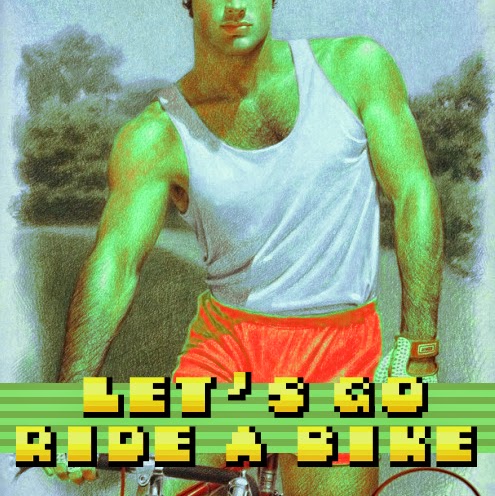
If you’d like to listen or download — just right-click any song you like to save — you’ll need the password. I’m happy to give it. Just email me or tweet me or whatever and I’ll hook you up.
And here’s the September mix, in case you want to further take in my own personal soundtrack. The same password will get you into both.
If you’d like to listen or download — just right-click any song you like to save — you’ll need the password. I’m happy to give it. Just email me or tweet me or whatever and I’ll hook you up.
And here’s the September mix, in case you want to further take in my own personal soundtrack. The same password will get you into both.
Wednesday, October 1, 2014
From Quentin Tarantino to Jayne Mansfield in Three Songs
You probably remember the 5.6.7.8’s from the finale of Kill Bill: Vol. One. They’re the all-girl rockers covering “Woo Hoo” and “I’m Blue” onstage before everyone starts losing limbs. You may also know them as the band that all those Vonage ads made you start hating, but they seem to have stopped, and thank god for that.
But they have this other, better song called “I Walk Like Jayne Mansfield.” It’s an original, and even if I shuffled “Woo Hoo” off my iTunes — again, because Vonage — this one remained.
Just recently, I found what, precisely, the 5.6.7.8’s were playing off with that track: Mansfield’s side career as a singer and, in particular, the 1965 track “Suey.”
She’s not singing, exactly. She’s sing-talking. If you wanted to get weird about it, you could say that what she’s doing is kinda-sorta a progenitor to rap. Though she certainly wasn’t the only one to do it, she is sing-talking over a beat, and what else is rap, really?
By the way, that’s Jimi Hendrix on lead guitar.
If you’d like to hear Mansfield’s actual singing voice, she had a B-side that same year, “As the Clouds Drift By,” which also features guitar work by Hendrix.
For a song that should be melancholy, it sounds ridiculously saccharine to the point that it’s trying to cover up for something dark. But then you realize you’re watching a slideshow of Mansfield’s heyday while listening to lyrics like “How you left me alone” and “Why’d you drift away?” and “I wonder where you are,” and it gets dark.
Also, after having heard the 5.6.7.8’s version of “Woo Hoo” a million times, it’s strange to hear the original. Ladies and gentlemen, The Rock-a-Teens!
Side note: If Casey Wilson wasn’t born to play Jayne Mansfield in a biopic, I don't know what to believe anymore.
Musical connections I should have made earlier, previously:
But they have this other, better song called “I Walk Like Jayne Mansfield.” It’s an original, and even if I shuffled “Woo Hoo” off my iTunes — again, because Vonage — this one remained.
Just recently, I found what, precisely, the 5.6.7.8’s were playing off with that track: Mansfield’s side career as a singer and, in particular, the 1965 track “Suey.”
She’s not singing, exactly. She’s sing-talking. If you wanted to get weird about it, you could say that what she’s doing is kinda-sorta a progenitor to rap. Though she certainly wasn’t the only one to do it, she is sing-talking over a beat, and what else is rap, really?
By the way, that’s Jimi Hendrix on lead guitar.
If you’d like to hear Mansfield’s actual singing voice, she had a B-side that same year, “As the Clouds Drift By,” which also features guitar work by Hendrix.
For a song that should be melancholy, it sounds ridiculously saccharine to the point that it’s trying to cover up for something dark. But then you realize you’re watching a slideshow of Mansfield’s heyday while listening to lyrics like “How you left me alone” and “Why’d you drift away?” and “I wonder where you are,” and it gets dark.
Also, after having heard the 5.6.7.8’s version of “Woo Hoo” a million times, it’s strange to hear the original. Ladies and gentlemen, The Rock-a-Teens!
Side note: If Casey Wilson wasn’t born to play Jayne Mansfield in a biopic, I don't know what to believe anymore.
Musical connections I should have made earlier, previously:
Tuesday, September 9, 2014
Big Hair, Big Trouble
I’ve made a mix. It’s for September. It’s not especially Septembery, but I suppose you can’t say it’s not a September mix. But if you’d like a peek at what music is informing my mental state, then this is the album for you.

I’ve also made album art. Go ahead and click it if you’d like to hear my selections. If you like them, you can right-click and save them, but I insist you buy the associated albums if you think the songs are worthwhile.
It’s very here and there, I know. It’s a good overview of what I listen to, but there’s no more solid throughline than “Oh, this is what Drew happens to be listening to nowadays.” Your mileage may vary.
I’ve also made album art. Go ahead and click it if you’d like to hear my selections. If you like them, you can right-click and save them, but I insist you buy the associated albums if you think the songs are worthwhile.
It’s very here and there, I know. It’s a good overview of what I listen to, but there’s no more solid throughline than “Oh, this is what Drew happens to be listening to nowadays.” Your mileage may vary.
Thursday, September 4, 2014
Beware the Mighty Septopus
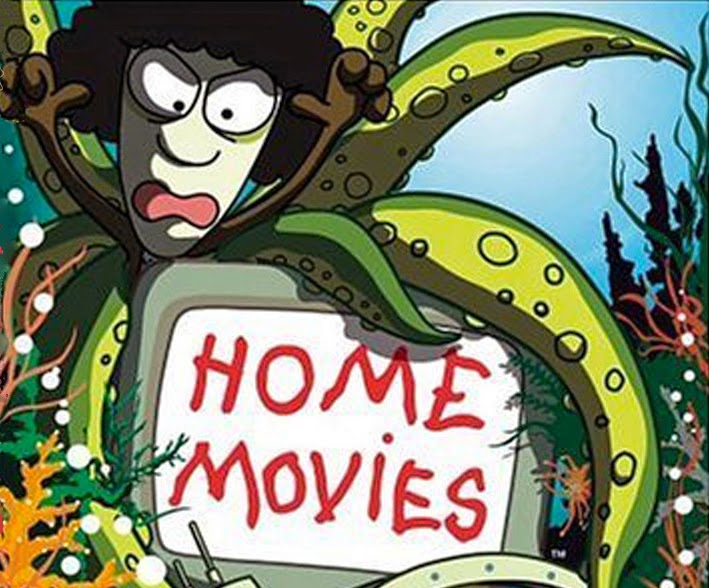
Please enjoy “Septopus,” the end credits song from the Home Movies episode “The Heart Smashers.”
No really, listen to it. It’s important for this story.
Way back when, the band Fleet Foxes was new. I actually remember writing the post back in 2008 about how the band’s sound was inspired in part by old RPG music, a fact that’s not especially evident just listening to their songs but that makes sense once you hear about it. I remember buying the album. And I remember a co-worker asking if I wouldn’t mind burning her a copy.
Now, I could have told her that I wouldn’t be complicit in her music piracy. I could have told her that she’d failed to follow through on several work-related favors I’d asked of her and, as such, I just couldn’t be bothered. Or I could have just said, “Oh no, I plan on turning into a lava monster any moment now, so you’d better run on home or I will catch you with my lava arms. Run! Never return! Lava arms!” or something thereabouts. But I said yes, with all these thoughts of unfulfilled requests and molten lava arms swirling around in my head when I got home.
When I got around to burning the album, however, I inserted one extra track: “Septopus.” I’d done this before. In college, a roommate asked me to burn the new White Stripes CD for her and I inserted the Clarissa Explains It All theme song about two-thirds of the way through, and it infuriated her because she’d always forget to skip that track and would consequently get blasted by the opening “Na na na na na.” I think it killed whatever mood she was trying to establish. “Septopus,” in the context of this strummy, harmony-laden Fleet Foxes album, however, seemed less jarring, and I was just curious to see what would happen.
The short answer? Nothing.
A few days after I gave her the CD, I asked how she was enjoying it. She said she loved it. She called the album peaceful and beautiful. “Any of the tracks in particular stand out to you?” I asked. She said a few did, but that she’d have to match them with the titles. I left it at that. I didn’t want to give her any reason to be suspicious.
I suppose it’s possible that she eventually transferred those tracks to her iPod and is still driving around today, blissing out on those gentle Fleet Foxes chords and, unwittingly, also on those of Brendon Small as he sings about a seven-armed octopus who is always eating pies. But I have a best-case scenario in my head as well, and that is this coworker one day attending a Fleet Foxes concert where she’s standing in the front row and in between every song break she’s screaming “SEPTOPUS! SEPTOPUS! PLAY ‘SEPTOPUS’!” at the top of her lungs, and then turning to the concert-goer next to her and saying, “I’ve seen these guys all over the country now and they freaking never play ‘Septopus,’ not even for encores.”
Regardless of how she finds out, I’m just sad I won’t be there when someone eventually tells her “Fleet Foxes don’t have a song called ‘Septopus.’ Also, what’s a septopus?”
Here’s the full Home Movies episode, in case it’s been too long since you’ve seen the show. I queued it up to Fenton’s performance of the Septopus song, which I now realized has lyrics that the “Fleet Foxes” version doesn’t.
And would you look at this: Fenton in the Septopus costume appears on Home Movies’ season four DVD box set, and I just now noticed.
No really, listen to it. It’s important for this story.
Way back when, the band Fleet Foxes was new. I actually remember writing the post back in 2008 about how the band’s sound was inspired in part by old RPG music, a fact that’s not especially evident just listening to their songs but that makes sense once you hear about it. I remember buying the album. And I remember a co-worker asking if I wouldn’t mind burning her a copy.
Now, I could have told her that I wouldn’t be complicit in her music piracy. I could have told her that she’d failed to follow through on several work-related favors I’d asked of her and, as such, I just couldn’t be bothered. Or I could have just said, “Oh no, I plan on turning into a lava monster any moment now, so you’d better run on home or I will catch you with my lava arms. Run! Never return! Lava arms!” or something thereabouts. But I said yes, with all these thoughts of unfulfilled requests and molten lava arms swirling around in my head when I got home.
When I got around to burning the album, however, I inserted one extra track: “Septopus.” I’d done this before. In college, a roommate asked me to burn the new White Stripes CD for her and I inserted the Clarissa Explains It All theme song about two-thirds of the way through, and it infuriated her because she’d always forget to skip that track and would consequently get blasted by the opening “Na na na na na.” I think it killed whatever mood she was trying to establish. “Septopus,” in the context of this strummy, harmony-laden Fleet Foxes album, however, seemed less jarring, and I was just curious to see what would happen.
The short answer? Nothing.
A few days after I gave her the CD, I asked how she was enjoying it. She said she loved it. She called the album peaceful and beautiful. “Any of the tracks in particular stand out to you?” I asked. She said a few did, but that she’d have to match them with the titles. I left it at that. I didn’t want to give her any reason to be suspicious.
I suppose it’s possible that she eventually transferred those tracks to her iPod and is still driving around today, blissing out on those gentle Fleet Foxes chords and, unwittingly, also on those of Brendon Small as he sings about a seven-armed octopus who is always eating pies. But I have a best-case scenario in my head as well, and that is this coworker one day attending a Fleet Foxes concert where she’s standing in the front row and in between every song break she’s screaming “SEPTOPUS! SEPTOPUS! PLAY ‘SEPTOPUS’!” at the top of her lungs, and then turning to the concert-goer next to her and saying, “I’ve seen these guys all over the country now and they freaking never play ‘Septopus,’ not even for encores.”
Regardless of how she finds out, I’m just sad I won’t be there when someone eventually tells her “Fleet Foxes don’t have a song called ‘Septopus.’ Also, what’s a septopus?”
Here’s the full Home Movies episode, in case it’s been too long since you’ve seen the show. I queued it up to Fenton’s performance of the Septopus song, which I now realized has lyrics that the “Fleet Foxes” version doesn’t.
And would you look at this: Fenton in the Septopus costume appears on Home Movies’ season four DVD box set, and I just now noticed.
Wednesday, August 27, 2014
Deirdre in the Final Dungeon
Today marks the twentieth anniversary of Earthbound, a thoroughly strange Nintendo game that pits plucky psychic children against animate gas pumps, irate old women and, finally, an intangible space demon. I’ve written a bit about the game over the years, and most recently about a weird intersection it makes with Ric Ocasek that would tumble around in my head for years before I’d figure out the connection.
You see, Earthbound composer Keiichi Suzuki made an unusual decision in making the game’s soundtrack: He used samples, many of which came straight from popular songs, and that’s just not something you heard often during the sixteen-bit era. Just recently, I found a video that explained which of the game’s compositions drew from major, mainstream songs by bands like The Beatles.
If you fast-forward to the 4:07 mark, you’ll hear that the game samples “Deirdre,” a Beach Boys song from the band’s 1970 album, Sunflower. This is an album I know. This is a song I’d heard before. But I’d never recognized it in the music for Earthbound’s final dungeon until the video pointed it out.
For long-play comparison purposes, here’s the full track of “Deirdre.”
And here’s “The Place,” the music for the final part of the Cave of the Past.
The Earthbound track isn’t particularly catchy. It’s atmospheric and strange, but it’s basically just a collection of variations on that one Beach Boys sample — the one right at the beginning where they’re singing the name Deirdre. Nonetheless, I liked the track, and it stuck in my head longer than a lot of the other Earthbound music. I wonder if it did because on some subconscious level I knew it was familiar.
Hmm.
Speaking of Earthbound’s strange pop culture connections, there’s one that still hasn’t been solved yet. The game opens with a scene of UFOs destroying some American everycity. (Notably, no event like this actually occurs in the game.)
That guitar, it has been determined, was supplied by none other than Mario’s daddy, Shigeru Miyamoto, even if he’s identified in the end credits as M.D. Seeger. But twenty years later, no one knows what the image is supposed to depict. It sure looks like a digitized photograph and sure seems like something that was also drawn from pop culture, but no one seems know where it might have come from.

Do you?
 |
| via |
You see, Earthbound composer Keiichi Suzuki made an unusual decision in making the game’s soundtrack: He used samples, many of which came straight from popular songs, and that’s just not something you heard often during the sixteen-bit era. Just recently, I found a video that explained which of the game’s compositions drew from major, mainstream songs by bands like The Beatles.
If you fast-forward to the 4:07 mark, you’ll hear that the game samples “Deirdre,” a Beach Boys song from the band’s 1970 album, Sunflower. This is an album I know. This is a song I’d heard before. But I’d never recognized it in the music for Earthbound’s final dungeon until the video pointed it out.
For long-play comparison purposes, here’s the full track of “Deirdre.”
And here’s “The Place,” the music for the final part of the Cave of the Past.
The Earthbound track isn’t particularly catchy. It’s atmospheric and strange, but it’s basically just a collection of variations on that one Beach Boys sample — the one right at the beginning where they’re singing the name Deirdre. Nonetheless, I liked the track, and it stuck in my head longer than a lot of the other Earthbound music. I wonder if it did because on some subconscious level I knew it was familiar.
Hmm.
Speaking of Earthbound’s strange pop culture connections, there’s one that still hasn’t been solved yet. The game opens with a scene of UFOs destroying some American everycity. (Notably, no event like this actually occurs in the game.)
That guitar, it has been determined, was supplied by none other than Mario’s daddy, Shigeru Miyamoto, even if he’s identified in the end credits as M.D. Seeger. But twenty years later, no one knows what the image is supposed to depict. It sure looks like a digitized photograph and sure seems like something that was also drawn from pop culture, but no one seems know where it might have come from.
Do you?
Monday, August 4, 2014
Floating in a World of Julee Cruise
Not that I’m going to start a “things I heard on the radio” tag, but here is another post about something I heard on the radio.
Yesterday, I wrote about hearing something that sounded familiar and not being able to determine why. Today, I present a more successful version of this situation. Recently, I happened across This Mortal Coil’s “Song to the Siren.” While I’d heard it before, listening to it in the car I was struck by how much it reminded me of David Lynch and Twin Peaks and, in particular, the music of Julee Cruise.
See if you hear it too.
When I got home, I read up on the song and discovered that it actually has a significant history with David Lynch’s work. Lynch wanted to use the song in Blue Velvet but couldn’t. He therefore ended up reaching out to a then-unknown composer named Angelo Badalamenti, who was on-set helping Isabella Rossellini get her vocals right for the performance of the title track. From a recent Rolling Stone piece on Lynch and Badalamenti’s work together:
Cruise eventually sang in the title track to Twin Peaks, though her vocals would be excised from the portion shown before every episode. She also appeared on the show and in the prequel move as well, and Lynch and Badalamenti, in turn, wrote and produced additional songs for her throughout the next decade — and it all happened because a certain Tim Buckley cover was too expensive.
Incidentally, Cruise has a small cameo in another famous piece of culture about murders in a small town: a remix of her track “Artificial World” is playing in Tatum’s bedroom during the “Bam! Bitch went down” scene in Scream — because mid-’90s teens loved them some Julee Cruise dance remixes. Can anyone point me toward a non-remixed, original version of “Artificial World”?
Yesterday, I wrote about hearing something that sounded familiar and not being able to determine why. Today, I present a more successful version of this situation. Recently, I happened across This Mortal Coil’s “Song to the Siren.” While I’d heard it before, listening to it in the car I was struck by how much it reminded me of David Lynch and Twin Peaks and, in particular, the music of Julee Cruise.
See if you hear it too.
When I got home, I read up on the song and discovered that it actually has a significant history with David Lynch’s work. Lynch wanted to use the song in Blue Velvet but couldn’t. He therefore ended up reaching out to a then-unknown composer named Angelo Badalamenti, who was on-set helping Isabella Rossellini get her vocals right for the performance of the title track. From a recent Rolling Stone piece on Lynch and Badalamenti’s work together:
“David reluctantly agreed to write a lyric, and he thought writing a new song was absolutely preposterous because ‘Song to the Siren’ was his favorite song of all time,” Badalamenti says. “But Isabella came to the recording studio, where we were recording Blue Velvet, and she handed me a little piece of yellow paper and, in David's handwriting, it said, ‘Sometimes a wind blows and you and I float in love and kiss forever in a darkness and the mysteries of love come clear....’ I’m reading this and saying, ‘Hey man, where are the rhymes? And more important, where are the hooks that a song needs?’” To make things more quizzical, the only musical directions Lynch gave Badalamenti were to “compose something with no beginning and no end” and to make it “just ethereal beauty.”Here is that song:
Dumbfounded, the composer sat at his keyboard, staring at Lynch's scratch paper, and held a “long, soft, sustained, wide-voiced B major chord” for maybe a minute or more. “I was just listening to this chord, and it set a mood for me,” he recalls. “The melody just floated out and I knew that I married David’s description to this poetic lyric. I never changed a single word.” And thus, “Mysteries of Love” was born.
Cruise eventually sang in the title track to Twin Peaks, though her vocals would be excised from the portion shown before every episode. She also appeared on the show and in the prequel move as well, and Lynch and Badalamenti, in turn, wrote and produced additional songs for her throughout the next decade — and it all happened because a certain Tim Buckley cover was too expensive.
Incidentally, Cruise has a small cameo in another famous piece of culture about murders in a small town: a remix of her track “Artificial World” is playing in Tatum’s bedroom during the “Bam! Bitch went down” scene in Scream — because mid-’90s teens loved them some Julee Cruise dance remixes. Can anyone point me toward a non-remixed, original version of “Artificial World”?
Sunday, August 3, 2014
The Pleasurable Irritation of Misplaced Nostalgia
On one hand, this post may appeal especially to the video game-literate members of my audience. On the other, it speaks to a larger sensation that I'm sure we have no word for.
Here is Rene Aubry’s “Seduction,” an instrumental piano piece that I heard yesterday on KCRW.
Now, please, what does it sound like? Aubry released the song on his 2013 album, Forget Me Not, which means that whatever I’m thinking of mostly likely came out before, but something about this song triggers my nostalgia sensors nonetheless. Just given my own history, it’s likely whatever it reminds me of came from a video game, just because a life playing video game has meant a lot of time listening to instrumental “wallpaper” music. To me, the Aubry song sounds like a minor key version of something in a major key, but for the life of me I can’t say what.
Is it this? Is it this? Does this trigger anyone else’s nostalgia sensors? This is driving me crazy, but in a way I don’t especially mind.
Here is Rene Aubry’s “Seduction,” an instrumental piano piece that I heard yesterday on KCRW.
Now, please, what does it sound like? Aubry released the song on his 2013 album, Forget Me Not, which means that whatever I’m thinking of mostly likely came out before, but something about this song triggers my nostalgia sensors nonetheless. Just given my own history, it’s likely whatever it reminds me of came from a video game, just because a life playing video game has meant a lot of time listening to instrumental “wallpaper” music. To me, the Aubry song sounds like a minor key version of something in a major key, but for the life of me I can’t say what.
Is it this? Is it this? Does this trigger anyone else’s nostalgia sensors? This is driving me crazy, but in a way I don’t especially mind.
Monday, June 23, 2014
Sit Down on the Chair / Think About Your Dance Affairs
I make no excuses for being a complicated man whose likes are separated only by a small margin from his dislikes. Today’s example: an obscure ’80s song that sounds not all that different from the one I made fun of just last week.
Pros: Unlike the last song, it’s not about King Kong. Cons: Unlike the last song, it’s not about King Kong.
The band is Scotch. The song is 1984’s “Disco Band.” The genre is italo disco. And the country of origin is Italy. (Yes, that combo did make it somewhat more difficult to Google.) I’ve written about italo disco before, and all those same virtues and failings apply here: “Disco Band” has the trappings of the more familiar ’80s songs I love, but with the added novelties of being something I hadn’t heard a thousand times before as well as being sung in irreparably broken English. (Sample lyrics: “Baby / Baby / You’re my really disco band / I like you.”) Also, it must be said: For a song that opens out with a sample of someone coughing, it builds into something that’s surprisingly not terrible.
I’m not saying this is a good song, exactly. It’s kitsch. But it’s immensely listenable kitsch, unlike the King Kong song, which is something you just have to listen to out of the sheer astonishment that a group of people got together and all agreed that yes, in fact, this is a good, worthwhile thing to which humans will enjoy listening.
Here is that song again, for posterity, so the world may know:
So yeah, my musical choices are basically indefensible.
Italo disco, previously:
Pros: Unlike the last song, it’s not about King Kong. Cons: Unlike the last song, it’s not about King Kong.
The band is Scotch. The song is 1984’s “Disco Band.” The genre is italo disco. And the country of origin is Italy. (Yes, that combo did make it somewhat more difficult to Google.) I’ve written about italo disco before, and all those same virtues and failings apply here: “Disco Band” has the trappings of the more familiar ’80s songs I love, but with the added novelties of being something I hadn’t heard a thousand times before as well as being sung in irreparably broken English. (Sample lyrics: “Baby / Baby / You’re my really disco band / I like you.”) Also, it must be said: For a song that opens out with a sample of someone coughing, it builds into something that’s surprisingly not terrible.
I’m not saying this is a good song, exactly. It’s kitsch. But it’s immensely listenable kitsch, unlike the King Kong song, which is something you just have to listen to out of the sheer astonishment that a group of people got together and all agreed that yes, in fact, this is a good, worthwhile thing to which humans will enjoy listening.
Here is that song again, for posterity, so the world may know:
So yeah, my musical choices are basically indefensible.
Italo disco, previously:
Monday, March 17, 2014
The Winter That Wasn't
I've given up on winter, our single rainstorm notwithstanding. I spent the better part of Sunday afternoon in a tank top, and even then that was just to endure the heat indoors. But if I can't experience winter in a meteorological sense, then I'll take in a symphonic sense. Please, take three minutes to listen to Georgy Sviridov's 1975 composition "Snowstorm." This is the final part, "Winter Road."
Granted, you're reading words written by a guy who lives in L.A. and rolled up his sleeves for the walk to lunch today and hasn't seen actual snow falling in maybe a decade, but ol' Sviridov has actually captured something here that gives the feeling of a snowstorm — starting light, building to fierce and then fading away. It's beautiful.
And yes, of course, it reminds me of a video game. I don't know which one. Perhaps you do.
Granted, you're reading words written by a guy who lives in L.A. and rolled up his sleeves for the walk to lunch today and hasn't seen actual snow falling in maybe a decade, but ol' Sviridov has actually captured something here that gives the feeling of a snowstorm — starting light, building to fierce and then fading away. It's beautiful.
And yes, of course, it reminds me of a video game. I don't know which one. Perhaps you do.
Friday, February 14, 2014
Love Is Like a Stove / Burns You When It’s Hot
I know I already squeaked in one Valentine’s post, just at the edge of midnight, but I want to clarify my stance on love. As my dumb little nostalgia-nerdy sex joke earlier today demonstrated, I don’t like Valentine’s Day. However, I’m not against love — the emotion this holiday strives for but can only produce the cheap, knock-off, CVS version of. And if today can be for anything, I think it should be for earnest representations of love.
Like me, many ’80s children probably know the song “Love Hurts,” as performed by the rock band Nazareth and as featured in an especially persistent Gatorade commercial. I’d honestly not thought of the song as much besides a Gatorade jingle, until yesterday, when Morning Becomes Eclectic interviewed Spike Jonez, Karen O and Her production designer K.K. Barrett. The three were there to play “The Moon Song,” the Oscar-nominated song from Her, but while in the KCRW studio, they each named their favorite love song. Jonez picked Bob Dylan’s “You’re Gonna Make Me Lonesome When You Go,” While O picked Kitty Lester’s “Love Letters,” noting its beautifully warm melancholy. Only Barrett picked a song I didn’t know, however: a prior version of “Love Hurts,” performed by Emmylou Harris and Gram Parsons.
An analogy:
It felt strange for a song that I’d heard so many times and found meaningless to be given a whole new spirit when sung in a quiet, wistful country style — sung like they understand what they’re saying. It moved me, and if you are like me and spending a quiet night in on this February 14, then perhaps it will move you too.
Until this version, I’ve never noticed how much of a Roy Orbison quality the song has. (And yes, he recorded a version as well.) I’ve also noticed one lyrical difference. Whereas Emmylou and Gram sing “Love is like a stove / Burns you when it’s hot,” Nazareth switches it to “Love is like a flame,” I’d guess to avoid having a rock bank singing about an object as quaint and ordinary as a stove. It’s an idiotic substitution, of course, because flames are always hot. That, I guess, is a good example of how the meaning can get drained out things.
Here’s to the back half of this month.
Like me, many ’80s children probably know the song “Love Hurts,” as performed by the rock band Nazareth and as featured in an especially persistent Gatorade commercial. I’d honestly not thought of the song as much besides a Gatorade jingle, until yesterday, when Morning Becomes Eclectic interviewed Spike Jonez, Karen O and Her production designer K.K. Barrett. The three were there to play “The Moon Song,” the Oscar-nominated song from Her, but while in the KCRW studio, they each named their favorite love song. Jonez picked Bob Dylan’s “You’re Gonna Make Me Lonesome When You Go,” While O picked Kitty Lester’s “Love Letters,” noting its beautifully warm melancholy. Only Barrett picked a song I didn’t know, however: a prior version of “Love Hurts,” performed by Emmylou Harris and Gram Parsons.
An analogy:
the way Valentine’s makes me feel : “real love” ::
Nazareth’s “Love Hurts” : this version
It felt strange for a song that I’d heard so many times and found meaningless to be given a whole new spirit when sung in a quiet, wistful country style — sung like they understand what they’re saying. It moved me, and if you are like me and spending a quiet night in on this February 14, then perhaps it will move you too.
Until this version, I’ve never noticed how much of a Roy Orbison quality the song has. (And yes, he recorded a version as well.) I’ve also noticed one lyrical difference. Whereas Emmylou and Gram sing “Love is like a stove / Burns you when it’s hot,” Nazareth switches it to “Love is like a flame,” I’d guess to avoid having a rock bank singing about an object as quaint and ordinary as a stove. It’s an idiotic substitution, of course, because flames are always hot. That, I guess, is a good example of how the meaning can get drained out things.
Here’s to the back half of this month.
Monday, February 3, 2014
Tempo & the Increasingly Troubled Clef
a piacere (“to your pleasure”)
brioso (“lively”)
agitato (“excitedly”)
gentilmente (“gently”)
intimo (“intimately”)
adagissimo (“very slowly and calmly”)
affrettando (“rushed and nervous”)
fuocoso (“fiery”)
irato (“angrily”)
furioso (“furiously”)
bruscamente (“bluntly and abruptly”)
martellato (“as if struck with a hammer”)
decrescendo (“gradually decreasing in volume”)
con dolore (“with pain”)
grave (“seriously”)
pesante (“heavy”)
lontano (“distantly”)
lacrimoso (“mournfully”)
lamentoso (“with lamentation”)
tremolo (“trembling”)
notturno (“like a nocturne, as if intended for night”)
al fine (“to the end”)
espirando (“dying away”)
pianississimo (“as softly as possible”)
senza espressione (“without expression”)
estinto (“extinguished”)
al niente (“to nothing”)
Saturday, January 25, 2014
When It Goes Away, I’ll Dig a Hole
Hey, remember when the soundtrack to Scream 2 featured a track by Sugar Ray that was in every way making fun of Weezer? Or at least imitating Weezer’s sound to the best of their ability? And it was even titled “Rivers,” in case you didn’t make the connection on your own?
And also it’s kind of a better Weezer song than most actual Weezer songs?
Yeah, the ’90s were weird.
And also it’s kind of a better Weezer song than most actual Weezer songs?
Yeah, the ’90s were weird.
Subscribe to:
Posts (Atom)