Um, check out the simian.
I know what Donkey Kong is doing here: He’s shooting bees from that jar, even though that’s not something he actually does in Donkey Kong 3. But I wish whoever designed the box art had chosen to color the jar differently then he colored D.K., because it’s a bit suggestive — and, consequently, a bit disturbing. Is this why Donkey Kong 3 wasn’t a success?
Suggestive apes, previously:
Sunday, April 3, 2011
A (Mostly) Satisfied Mind
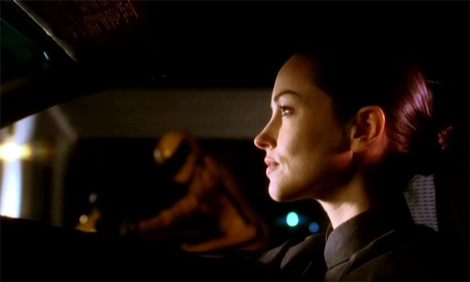
So now I know: The Bride, at the end of the first volume of Kill Bill made good on her threat that she’d cut off another one of Sofie Fatale’s body parts.
Possibly because I imagined that rage inspires creativity, I guessed that when the Bride said she’d amputate something “that you will miss,” she was referring to Sofie’s breasts. She wasn’t. In the extended version of the scene in Kill Bill: The Whole Bloody Affair, the Bride takes off Sofie’s remaining arm. Cue gushing. True, it had already been done, but it still sent a message.
However, rewatching Kill Bill for the first time in years, I realize I still have a few questions about the story. And they are these:
Kill Bill, previously:
Possibly because I imagined that rage inspires creativity, I guessed that when the Bride said she’d amputate something “that you will miss,” she was referring to Sofie’s breasts. She wasn’t. In the extended version of the scene in Kill Bill: The Whole Bloody Affair, the Bride takes off Sofie’s remaining arm. Cue gushing. True, it had already been done, but it still sent a message.
However, rewatching Kill Bill for the first time in years, I realize I still have a few questions about the story. And they are these:
- B.B. is four years old. So is Vernita’s daughter, Nikki. What are the odds that both B.B. ands Nikki were both fathered by Bill? I mean, why wouldn’t Bill sleep with all the female Deadly Vipers? And wouldn’t the revelation of them being half-sisters make for a great plot twist for when Nikki and B.B. face off? That is, if Volume Three ever happens?
- That said, why is Vernita allowed to leave the group when Beatrix was not? Is it only because Bill loved Beatrix? This may actually be the case, given that Budd has clearly also left the group by the time Volume Two takes place.
- Is Elle supposed to be older than Beatrix? In real life, Daryl Hannah is about ten years older than Uma Thurman, and you can tell in the movie just by looking at the two actresses. (No offense intended, Ms. Hannah.) But upon considering the plot, it seems like Elle joined the squad after Beatrix. She’s clearly resentful for having played second fiddle to Beatrix for so long, and she trained with Pei Mei after Beatrix, which is how Elle was able to kill him without Beatrix knowing. Perhaps Elle was just older when Bill recruited her?
- Is Bill present when O-Ren’s parents get murdered? I’ve read this a few times, and I’d heard the animated part of Whole Bloody Affair clears this up with a few extra frames, but I still couldn’t tell. Supposedly, based on the the sword and the rings sported by the guy who kills Mr. and Mrs. O-Ren, you can argue that he’s actually Bill in his younger days. If that is Bill there, I wonder if O-Ren knew this.
- So the final cut of the movie lacked a chapter included in an early version of the script. In it, Gogo’s sister, Yuki, chases Beatrix around Los Angeles in an ice cream truck. You can hear and see the truck driving around Pasadena at the beginning and end of the first chapter. It’s a nice little nod to what could have been, I guess, but I wonder if Tarantino kept it because he filmed the Vernita scene without having decided whether to include this chapter as well.
- Seeing the movie this weekend, I realized that Aubrey Plaza is a Gogo Yubari who channeled her malevolence into sarcasm. Think about it. (Not a question, I know.)
- Why “Arlene Machiavelli”?
- Dude, seriously: What is up with Tarantino and naming Kill Bill characters after letters?
- While we’re at it: I still can’t think of a good reason why Tarantino thought to bleep Beatrix’s name until Elle speaks it.
- Where, exactly, was the scene with Michael Jai White supposed to fit in?
- Why two different sets of credits? Seeing Volume Two back in the day, I guessed that the two different credits — the one with the whole cast and then the one with Beatrix driving her car — resulted from the film being split into two halves. But what I watched last night is supposedly the cut of the film that initially screened at Cannes. (I mean, it did have the French subtitles.) This version still had both credit sequences. It sounds weird to say in reference to this movie, but doesn’t two separate sets of credits seem like, well, overkill?
Kill Bill, previously:
Read more:
kill bill,
movies,
quentin tarantino
Thursday, March 31, 2011
Day of Thunder
A conversation that happened in my office today:
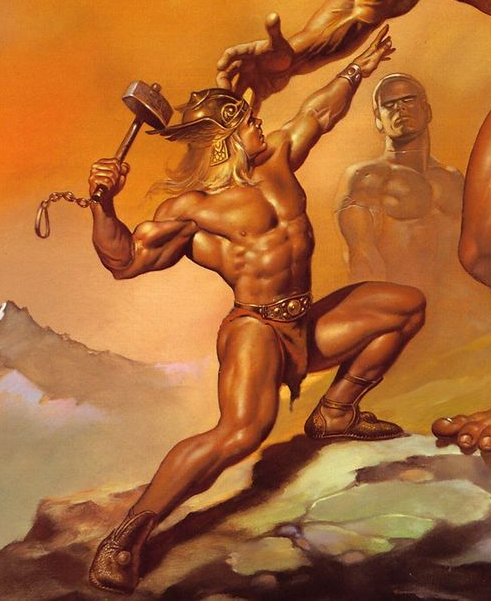
I mean, everyone knows that aliens don’t have magic hammers.
“Is Thor a god.”
Me: “Yes, he’s a Norse god.”
“Are you sure? The trailer made him look like an alien.”
Me: “I am sure. He’s a god — the Norse god of thunder. We named Thursday after him.”
I mean, everyone knows that aliens don’t have magic hammers.
Read more:
all things verbal,
mythology,
thor
Do You Like Scary Deleted Scenes?
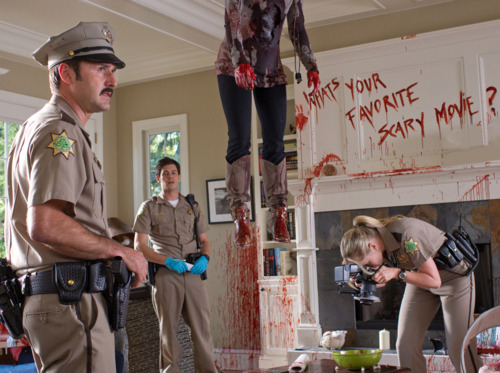
It’s not a spoiler to say so, I guess, but when I watched Scream 4 I didn’t see this scene.
Unless I zoned out for it, it wasn’t in the movie. Seem like a pretty elaborate scene to leave on the cutting room floor, no?
That’s not to mention that Marielle Jaffe’s “Time for someone new to die” line and the scene it appears in — the homage to the water fountain scene in the original — also didn’t show up. It is in the trailer, however.
Did I go to the bathroom and forget that I stepped out for a few minutes?
Unless I zoned out for it, it wasn’t in the movie. Seem like a pretty elaborate scene to leave on the cutting room floor, no?
That’s not to mention that Marielle Jaffe’s “Time for someone new to die” line and the scene it appears in — the homage to the water fountain scene in the original — also didn’t show up. It is in the trailer, however.
Read more:
horror movies,
movies,
scream 4
The Fair-Weather Umbrella
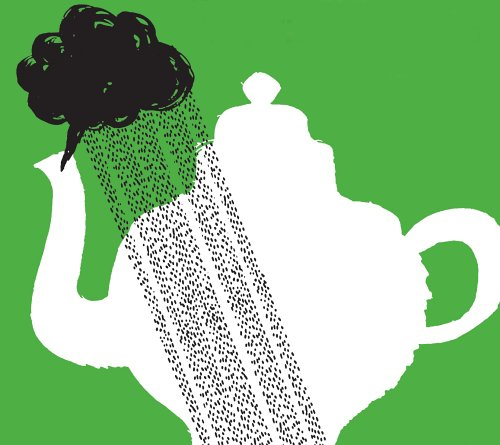
Things that occur to me on the drive home: English-speakers use two words to refer to the devices we carry around to block out the weather, and neither traces its etymology back to the purpose we’d most probably think of first. I’m talking about umbrellas. The word umbrella goes back to the Latin umbra, “shade,” so an umbrella, etymologically speaking, is a little, portable shade you carry around. However, when we use the word today, we immediately associate it with rain. The types that block out the sun might actually be called shade umbrellas, at least when they’re not being called parasols, which I guess would refer less often to the large porch-spanning variety and more often to the lightweight umbrellas that ladies might use to shield their faces from the sun. But parasol, etymologically speaking, means ultimately what umbrella does: “protection from the sun” — from the Italian para-, “protection against,” and sole, “sun.” I know etymology doesn’t dictate meaning, but I still think it’s interesting that the two words we ended up using for these things didn’t originally have any connection with the very useful function of keeping rain off our heads.
In French, if I understand correctly, the popular word is parapluie, with that second part meaning “rain.” Spanish has parasol and paraguas. And the German has Sonnenschirm and Regenschirm, with just Schirm, “screen,” being a catch-all — or, if you want to complicate this, an umbrella term — for the generic device, irrespective of whether it’s used in sun or in rain. Actually, now that I think of it, I wonder how universally a language’s word for umbrella has the extended meaning of “an overarching thing or concept.” Because if you’ve ever seen one — again, regardless of what you use it for — it makes for a handy metaphor.
Final wonderment: Why didn’t bumbershoot ever catch on?
In French, if I understand correctly, the popular word is parapluie, with that second part meaning “rain.” Spanish has parasol and paraguas. And the German has Sonnenschirm and Regenschirm, with just Schirm, “screen,” being a catch-all — or, if you want to complicate this, an umbrella term — for the generic device, irrespective of whether it’s used in sun or in rain. Actually, now that I think of it, I wonder how universally a language’s word for umbrella has the extended meaning of “an overarching thing or concept.” Because if you’ve ever seen one — again, regardless of what you use it for — it makes for a handy metaphor.
Final wonderment: Why didn’t bumbershoot ever catch on?
Read more:
all things verbal,
etymology
Wednesday, March 30, 2011
Attack of the Whale-Gorilla
Though it shames me to admit it given recent events, Godzilla has been on my mind. I know — lame, crass and superficial, like being at war with Norway and fearing a valkyrie invasion. Nonetheless, the big gray guy has been popping into my thoughts a lot more often than he has at any other point in my life. And it got me thinking: Where’d he get his name, anyway?
Anyone who doesn’t know that the Anglicization Godzilla comes from the Japanese Gojira deserves to lose all film geek status, but I feel like few people know that Gojira comes from a combo of the Japanese gorira — meaning “gorilla” and itself a Japanization of that word — and kujira, “whale.” At one point, the creature was conceived of as a hybrid gorilla-whale, which makes me suspect that Godzilla could owe even more of a debt to King Kong than I initially believed. There’s also an apocryphal story about Gojira being a nickname for a hulking employee at Toho Studio, which has produced the Gozilla movies, but no one has yet proved it.
A bit more: Remember that dead-eyed, awful American Godzilla? With Matthew Broderick? And Jamiroquai? The one that managed to be more of a Jurassic Park rip-off than an actual Godzilla movie? According to Wikipedia, The city-destroying lizard thing from that movie goes by two names: GINO (an acronym for “Godzilla in name only,” coined series fan Richard Pusateri) and Zilla, the name given to the American creature by Toho staff, who allegedly found it inferior and decided that it did not deserve to have God in its name. Which is awesome. Alongside the real Godzilla and more respected monsters such as Mothra and Ghidorah, Zilla is actually featured in Godzilla: Final Wars, the 2004 film that serves as a fiftieth anniversary mark for the franchise. In it, real Godzilla fells Zilla almost instantly. Take that, Matthew Broderick (and to a lesser extent, Maria Pitillo).
I know, I know. I should just rename this blog “Drew Reads Wikipedia.” If you can think of a better place to read endless information about stuff only a small faction of geeks truly cares about, then I’d love to hear where.
Whales plus other things:
Anyone who doesn’t know that the Anglicization Godzilla comes from the Japanese Gojira deserves to lose all film geek status, but I feel like few people know that Gojira comes from a combo of the Japanese gorira — meaning “gorilla” and itself a Japanization of that word — and kujira, “whale.” At one point, the creature was conceived of as a hybrid gorilla-whale, which makes me suspect that Godzilla could owe even more of a debt to King Kong than I initially believed. There’s also an apocryphal story about Gojira being a nickname for a hulking employee at Toho Studio, which has produced the Gozilla movies, but no one has yet proved it.
A bit more: Remember that dead-eyed, awful American Godzilla? With Matthew Broderick? And Jamiroquai? The one that managed to be more of a Jurassic Park rip-off than an actual Godzilla movie? According to Wikipedia, The city-destroying lizard thing from that movie goes by two names: GINO (an acronym for “Godzilla in name only,” coined series fan Richard Pusateri) and Zilla, the name given to the American creature by Toho staff, who allegedly found it inferior and decided that it did not deserve to have God in its name. Which is awesome. Alongside the real Godzilla and more respected monsters such as Mothra and Ghidorah, Zilla is actually featured in Godzilla: Final Wars, the 2004 film that serves as a fiftieth anniversary mark for the franchise. In it, real Godzilla fells Zilla almost instantly. Take that, Matthew Broderick (and to a lesser extent, Maria Pitillo).
I know, I know. I should just rename this blog “Drew Reads Wikipedia.” If you can think of a better place to read endless information about stuff only a small faction of geeks truly cares about, then I’d love to hear where.
Whales plus other things:
Read more:
etymology,
godzilla,
movies,
names,
pop culture minutiae,
things japanese,
weird animals,
whale
Monday, March 28, 2011
Subscribe to:
Posts (Atom)