Pages

Showing posts with label illness. Show all posts

Sunday, October 23, 2011

A Most Quaint-Sounding Cause of Barf

It’s hard to vomit gracefully. For one, there’s the noise — the vocal wretching followed by that wet slap. There’s also the undignified sprint to the toilet or sink or unattended fedora. There’s the whole Jackson Pollock-y result of it all. There’s the fact that vomiting serves as both an announcement of both everything you’ve eaten in the recent past (“You should chew your Goldfish crackers more thoroughly!”) as well as how bad your insides smell. (In certain cases, it can also testify to the vomiter’s inability to withstand Tilt-a-Whirls or celebratory shots.) In short, there’s a lot that can go wrong and you need all the help you can get.

So the next time your partially digested food starts rumbling up your throat in a daring escape from the humid, squishy prison that is you, consider this charming word to describe your illness.
collywobbles (KAH-lee-wah-bulz) — noun: 1. a stomachache. 2. anxiety or fear.
I mean, how great is this word? How cute? It could be a character in some picture book for British children. Maybe Mr. Collywobbles would be a nervous hare who discreetly in the background of every scene. I’d guess that the term was an antiquated British one, but it’s apparently used in all English-speaking lands — just not often enough.

The origin is uncertain. While Etymonline calls it a “fanciful formation from colic and wobble,” The Phrase Finder posits that it could have some connection to colly, meaning “coal-colored,” with the connection being that breathing coal-colored, coal-infused air actually made a lot of people sick. Wobble, by the way, is a word I forget exists until I actually think about it. Nothing against it. I sort of sounds like baby talk, I guess, but it’s a full-fledged word that refers to all manner of unsteady action, literal and otherwise.


It’s also a video game, apparently. The game may not be etymologically appropriate.

Previous words of the week after the jump.
Word nerd? Subscribe to Back of the Cereal Box’s word-related posts by clicking here.

Thursday, October 20, 2011

High-Octane Nightmare Fuel (14th Century Edition)

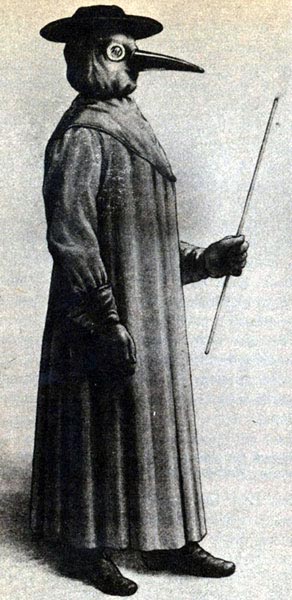
Do you know this amazing term, high-octane nightmare fuel? It’s a good one, popularized by the Television Tropes & Idioms website to describe those media images that have a way of worming into you subconscious and subverting the most personal, positive, familiar images into something skin-crawlingly horrible. This blog actually gets namechecked on the HONM page, specifically for my post on the Batman villain Baby Doll, whose kindergartner form belies the mind of a psychopath, though I think other posts here fit the category rather nicely. (Case in point: the owl choking on a rat or the futurismo train of death or this fucking spider or that woman who burned to death in the Brady Bunch kitchen or the Birdo fetish costume or that heart-stoppingly creepy painting “The Hands Resist Him”.) But I digress. I meant to be posting about new horrifying things here today, by which I mean new-to-you because you weren’t alive in fourteenth-century Europe.

This:


And this:


And this too:


Nightmare stuff, right?

This costume existed as a result of function rather than form. However, its intent was not to horrify the people viewing it so much as it was to protect the people inside it. Medical professionals donned the “Plague Bird” outfit when treating sick people because they misunderstood how germs were communicated from one person to another. In their minds, the waxed canvas robe shut out those pesky disease-causing vapors while the elongated “beak” mask buffered the nose with supposed plague-fighters such as roses, carnations, camphor and vinegar. In the end, of course, it’s about as effective as wearing green to ward of St. Patrick’s Day pinches, but back in the day this horrible thing was doctor-recommended.

Quaint, yes, but just think about the scenario: You, about to succumb to the plague in your filthy little thatched-roof, mud-floored, chicken-populated hovel, when all of a sudden this anthropomorphized carrion-picking bird shows up. He means well, but you don’t know that. In fact, you don’t know anything about what has caused pulsating black bumps to envelope your upper-body section. You’re delirious. And you’re scared in your delirium. In the end, your thoughts are occupied totally by wondering why this grotesque bird has come to visit you in your dying hours.

I totally understand people who fear birds now. Also: I cannot understand how there isn’t already a horror movie franchise based around the plague bird as the killer.


Now that is nightmare fuel right there.

Caw.

Saturday, February 12, 2011

The New “The Lady or The Tiger?”

Why is it so much better that the name Jelly Belly can refer to either the brand of fancy jellybeans or the horrific disease pseudomyxoma peritonea, in which a tumor causes excess mucus production that swells the abdomen and compresses and endangers the various torso vital structures?


Remember, when you hear “Jelly Belly,” think delicious multiflavored candies. Or cancerous, fatal abdominal swelling. Your pick.

Monday, December 15, 2008

Girl Lice, Boy Lice

Dina knows me well enough to point me in the direction of the Wikipedia page for cooties.

What you may not know: By most accounts, the word seems to come from kuto, which in various Austronesian languages refers to head lice, the non-head-residing kind of lice, and fleas. (What a great catch-all word to know if you’d rather not emerge from your travels infested.) From that word, soldiers passing through Malaysia or the Philippenes or wherever formed an Anglicized plural that we use today to refer to the germs we supposedly get from the opposite sex. (Oddly, we don’t use quite as often as adults, even though the opposite sex is just as likely to give us germs. A very specific kind of germs, depending on what you’re into.) The Wikipedia article notes that the term for this imaginary ailment has some fairly entertaining names in Scandinavia.
  • in Denmark: pigelus and drengelus, literally “girl lice” and “boy lice”
  • in Norway: jentelus and guttelus, also literally “girl lice” and “boy lice”
  • in Finland: tyttöbakteeri, literally “girl bacteria”
  • and the most entertaining of all, the Swedish tjejbaciller, literally “girl bacillus”
Good job, Dina girl, you tjejbaciller-carrier you.

Saturday, July 26, 2008

Proper Terminology for Scabby-Mouthed Sheep

Word of the week, being presented a few hours later than normal. This week's pick has limited use, but is fun to say and, quite possibly, the kind of word that can prove handy in a match of Scrabble.

orf (pronounced like you'd think) — noun: a sheep-born disease that causes red, oozing sores around the mouth.
This word might seem out-of-place in a book like Depraved and Insulting English, which is where I found it, but this word's potential use in mockery is alluded to in book's example sentence: "Jamie wasn't going to let a little thing like a case of orf keep him from attending the shepherd's ball." Yes, in fact, orf can be transmitted to humans, as the Wikipedia article on the subject notes. But while human-ovine love could certainly be one means of inter-species infection, less salacious interactions between the wooly ones and their non-wooly caretakers can also result in the disease spreading. Still funny, though. The next time you see someone with a scab, suggest that it could be orf.

The biological aspects of orf weren't what led me to pick it, however. Simply put, it was short, unfamiliar and looked like it would be fun to say. (On that third count: It totally is, especially repeatedly and in rapidly.) Most dictionaries don't feature this word, but Wikipedia suggests that orf means "rough" in Old English. I would have supposed that the our word rough also came from the Old English orf, with the letters "O" and "R" being transposed for the same reasons that the Middle English brid became our word "bird." But that doesn't seem to be the case here, as the American Heritage Dictionary ruh. Shows what I know.

Previously celebrated words-o'-the-week:
And now that I look at the list, I notice that three of the words picked so far refer to illnesses of some sort. The pattern is accidental, I swear, but perhaps I should just rename this feature "Disease Words of the Week." Notable candidates for such a series: the adorable-sounding pica, the tropical-sounding framboesia, and the downright strange-sounding maple syrup urine disease.

Saturday, May 24, 2008

Aluminum Clutch

For the third installment of word-of-the-week, I've decided that Useless Vocabulary Day is too pejorative a term for something that I aim to be doing for your enjoyment. (And you will enjoy it. Enjoy it! So help me, you will enjoy it.) Henceforth, it shall be known as Dia de las Palabras Nuevas.
itaiitai — noun: a bone disease caused by cadmium
Showing up next to nowhere online, itaiitai apparently is a real thing. Its name purportedly originates from the Japanese expression for "ouch, ouch." While I can't find any pronunciation guide online, I believe it's six syllables: "eee-tai-ee-tai." The book I got this from, The Superior Person's Book of Words, notes that the word is of interest in that its etymology could be a pattern for new English names for diseases and disorders — "eekeek" for arachnophobia, "unhunh" for constipation, "uhoh" for premature ejaculation, as so forth. Seems reasonable.

There must be a way to work this word into a clever, sentence-long palindrome.

Saturday, May 17, 2008

Garden of Sleaze

It's Saturday. Prepare for Strange Word Day, which I think I'm going to rename Useless Vocabulary Day.
grandgore — noun: a Scottish word for "syphilis"
A far more impressive name for a disease that leaves an impression on you. Also something that sounds like it came from a Harry Potter novel. Next time you get syphilis, try telling your friends that you have grandgore instead. They'll respect you for it.

The first webpage of note that features this word is the Wikipedia page for Inchgarvie, a Scottish island that, under the Grandgore Act of 1497, became a place of "compulsory retirement" for syphilitics. Speaking of shades of connotation, "retirement" has a much nicer ring to it than "quarantine."

[ Source: Weird and Wonderful Words ]