Pages

Tuesday, July 30, 2013

Why I Had to Quit Animal Crossing

Short version: I can’t play Animal Crossing anymore because it’s making me feel like a failure at life — that is, more so than playing any most other video games would.


If you’re not the joystick-handling crowd, know this much: Animal Crossing is a Nintendo franchise, the newest installment of which recently came out for the Nintendo 3DS. The game essentially works like a Tamagotchi that beams you into its world (yes, like that one Saved by the Bell Saturday morning preview), so instead of just taking care of one fictional organism, you’re charged as custodian of a whole fictional environment. You pull the weeds. You arrange your home for maximum feng shui. You scuttle among your anthropomorphic neighbors running errands. And this is all supposed to be fun.

Further explanation of the death of cutesiness after the jump.

the sloth who runs the plant shop. he no 
longer exists,  because i deleted my save file. 
The thing is, despite my dreary description, the Animal Crossing games are fun. There may be no end-of-stage flagpole to slide down, no bad guy to punch, no princess to rescue, but they seem entertain in the classic Nintendo sense, and that’s why I’ve purchased and played each of them that have been released in the U.S. Yes, they’re cutesy as fuck, but that superficial kiddiness hides some deep, engrossing gameplay and more potential for creativity than other major franchises. Most recently, I bought the newest one, New Leaf, which allows to become the mayor of your fictional town and therefore pursue public works projects. I am 100 percent not shitting you: You pick a point in the local creek that could use a bridge, and then you start raising public funds from the various dogs, cats, deer, mice and octopuses who live in your town to build said bridge. Again, it seems bizarre to imagine charity drives as an integral aspect of a video game, but somehow Animal Crossing works. These ceaseless chores somehow result in a cuter Sim City wherein you can design your town in pleasingly specific ways and eventually have it inhabited by a dress-wearing frog who’s probably unaware that her name refers to a French delicacy made from her own body.

the tapir who ran the dream shop. see,
because in japan, tapirs eat dreams
Inexplicable fun factor aside, I have deleted the file from my 3DS and will never, ever play it again.

I’m thirty-one, and although I feel no guilt about sinking a few hours here and there into video games, playing Animal Crossing gave me a growing sense of anxiety. In my actual life, where squirrels don’t wear clothes and don’t write me letters, I haven’t done enough in the city I live in. I don’t actually want to build bridges over local rivers, I should point out, but having been a (legal) adult for a decade now, I do wonder what I could do to make the space I live in better. As a result, I feel uneasy about letting Animal Crossing successes sub in for real-life ones, consciously or unconsciously. I just couldn’t stroll around a fictional neighborhood, cleaning up garbage and planting trees, when I knew I was only sitting in my apartment and ignoring the fact that my real neighborhood could also benefit from less garbage and more trees.

the flanders-sweatered bastard to whom you
always owe money. i am particularly happy
about his newfound non-existence.
That’s actually just half of my motivation to quit Animal Crossing, though, because I could easily say that it’s pointless to rescue in-game princesses when I’m doing nothing to help the real-world princess community. No, at least in the princess-rescuing games, you rescue the princess and then finish up. With Animal Crossing, there’s no way to beat the game. You can’t win, because that’s not the point, and given enough time you will always find something more to do. At this point in my life, I can’t commit to a fictional universe that won’t end. It’s kind of like how I stopped reading The Walking Dead (and yes, I’m also wondering if anyone’s ever pointed out this one single way in which Animal Crossing is like The Walking Dead): I like my plots to follow traditional arcs with rising action, a climax, and then falling action. I like to commit my time until the end and then move on, perhaps having learned something about life and living. I step into my fictional universes knowing that the experience has been thought out, A to Z.

So that’s why I said no to Animal Crossing. Is it weird if I imagined my little town and its cuddly inhabitants being obliterated by an apocalypse when I deleted the file? Like, their pixels flying apart as the very core of their existence ceased to be? No, don’t answer that. I’m pretty sure that’s how everyone would feel.

Video games, previously:

Monday, July 29, 2013

Arrested Development and the Mysterious Nature of Cindi Lightballoon

For reasons I will never be able to explain, I seized on Cindi Lightballoon. Arrested Development has no shortage of strange character names, and while a lot of them seem to be an in-joke or an allusion or a pun, some go unexplained. Your Gene Parmesans, your Jan Eaglemans, your Trisha Thoons just exist in the Bluthverse, sounding like they should mean something if only you could just make the connection. Of these, the one who bothered me most was Cindi Lightballoon, George Sr.’s prison girlfriend, who was played by Jane Lynch back before she herself was imprisoned on Glee. That last name just seemed like too awkward a combination of familiar words to not mean something to someone. Having finished Arrested’s fourth season, I still can’t tell what her name means, but now I’m thinking that the show maybe made a callback to it.

In order to disguise her true identity when she’s trying to romance the politician Herman Love (“her man-love”?), Lindsay gives the fake name Cindy Featherbottom.


Now this might be one of the more layered names in the history of the show. First off, the name seems like a callback to the fake name Tobias gives when he becomes the family’s Mary Poppins-y, Mrs. Doubtfire-ish nanny, Mrs. Featherbottom. However, in the show’s fourth season, there’s also a new character named Cindy — an ostrich that lives with Lindsay while she’s squatting in Lucille’s apartment. Cindy literally has a feathered bottom, see, because she’s an ostrich. Because the show puts so much care into naming its characters and building on its own past, I was surprised the writers re-used a name. But maybe the doubling was intentional, because who besides the svelte, six-foot-tall Jane Lynch deserves to be called ostrich-like? (Struthious, to use the SAT vocab word.)


It’s a little mean, Sue Sylvester not withstanding, but I can’t let it go. I mean light : feather :: balloon : … bottom? No, wait, that doesn’t work at all. Damn. For the record, I tweeted the question at Chuck Martin, the Twitter-savvy of the two writers credited with this particular Arrested episode. He recommended I ask Mitch Hurwitz, who presumably has better things to do than answer niche fan questions and who has yet to respond.

Regardless of anything, we can all agree that having Cindy the Ostrich walk the red carpet at the fourth season premiere is the best thing ever.

TV names overthought, previously:

Thursday, July 25, 2013

As You Walk Along With Your Ding-Ding-Dong

Just watch this this 1975 video of the song “Ding a Dong,” the winning entry of the 1975 Eurovision Song Contest, as performed by the inexplicably named disco band Teach-In.


Okay, so a few things.

Why does the audience look so miserable? Okay, sure, the song sucks, but why would they go to this show in the first place?

Wait, was this actually East Germany?

Was attendance to the disco party compulsory?

Were they shopped in after the fact using so-called “green screen” technology?

Is there a song where the word dong gets mentioned more often?

I think Dina put it best when she attempted to comprehend how this thing came about: “Someone had to have written this down at some point. And then showed it to someone else. And then they recorded it.”

Another point for Dina: “Is she saying ‘Maybe it’s a bigot’?”

Is the whole point of the song to be constantly singing so you never feel sad? That seems like a poor plan, seeing as how no one will want to be your friend if you’re dinging dongs all day. I mean, she’s there singing this song on a microphone and no one in the audience looks remotely happy. WHERE DID SINGING GET YOU, LADY FROM TEACH-IN?

At 2:03, she attempts to make contact with one of the robots in the audience and my heart just aches for her, this lonely ding-dong woman from West Germany.

This is all. Go forth and ding all the dongs.

OMG, you have to hear this, but not because it’s good, previously:

Tuesday, July 23, 2013

She, Wolf

Do you remember when Amanda Seyfried covered “Li’l Red Riding Hood” back in 2011 to promote her movie Red Riding Hood? I think everyone’s reaction fell somewhere between, “Oh, that’s right. She can kind of sing,” and “I think commercials ruined this song for me, Lily Kane or no Lily Kane.” I fell into the latter camp. Sam the Sham released the original back in 1966, and just within my lifetime, it’s been featured in movies, TV and commercials often enough that no one really needs to hear it again. Besides, it’s not the best song in the world. It’s catchy, but it didn’t take a genius songwriter to see the sex metaphor in the Big Bad Wolf.

Then again, there’s this: a response song, “(Hey There) Big Bad Wolf,” by the Sham-ettes, a girl group spin-off to Sam the Sham and the Pharaohs. I think I love it.


Some notes:

It wasn’t written for this Betty Boop cartoon. The cartoon was just synched rather well to the song. The fact that Boop herself was initially conceived of as a lady bulldog just adds an extra layer of weird to the Sexy Bad Wolf situation.

It really is so much more disturbing because it's one of those “old-timey” cartoons, though. We’ve been over this.

I really want to rally behind the song as an awesome way to turn the whole stalker-as-love interest thing around, since it has Red calling out the Wolf on being a creepy. You can see it that way, but there’s also a lot of awkwardness with Red dropping lines like “No use to keep your sheep suit on / You can come for me by coming on strong / By the time we get to grandma’s house / You’ll be as meek as a little old mouse.” Whatever power the song gives Red is undercut by the whole “I can save him!” mindset. What to say? Love is complicated.

Oh, and when she says “sheep suit,” I assume she’s referring to lambskin condoms.

Sam the Sham really clung to the fairy tale-as-sex metaphor thing. In 1967, his band released its own sequel to “Li’l Red Riding Hood,” titled “The Hair on My Chinny Chin Chin.” A moderate hit, it uses the Wolf blowing down a house as a poppy, danceable rape metaphor. There’s also “Mary Is My Little Lamb” and a Pied Piper-themed song that seems to be hiding from Google.

There’s a lot of work to be done with this song and humans-as-animals and humans making animal noises. The fact that the song closes out with the female singer alternating between wolf howls and sheep bleats seems like the tidbit that would yield a lot for the dark soul who wants to press into the matter.
    Here are the lyrics to “(Hey There) Big Bad Wolf,” just because it’s not always super clear what the singer is saying.
    (Is that the Big Bad Wolf I see?
    Why this cat’s following me!)

    Hey there, Big Bad Wolf
    You’ve been following me through the woods
    You are the guy that I’ve been waiting for
    (Listen to me!)

    Hey there, Big Bad Wolf
    Please hold me tight ‘cause I know you could
    Please stay with me while I’m walking through the woods alone

    What dark eyes you have,
    The kind of eyes that mystify
    But I’m gonna show you how much I care
    ‘Cause my love with you I’m gonna share
    I’ll try to keep you satisfied
    ‘Cause I’ve been walking back by your side
    And I’ll be yours and you be mine
    And together we will feel so fine

    So dontcha say you can’t pretend
    ‘Cause I’ll still love you till the end
    You don’t have to be a Big Bad Wolf anymore

    Hey there, Big Bad Wolf
    You’ve been following me through the woods
    You are the guy that I’ve been waiting for

    I really love you now
    And we can get alone somehow
    Stay by me so I’ll be safe
    Until we get to grandma’s place
    And no use to keep your sheep suit on
    You can for me by coming on strong
    By the time we get to grandma’s house
    You be as meek as a little old mouse

    Hey there, Big Bad Wolf
    You’ve been following me through the woods
    You are the guy that I’ve been waiting for
    Oldies analyzed in far closer detail than they deserve, previously:

    Eight Batman Women Whose Names Make Them Sound Like Soap Opera Villains

    The trouble with Bruce Wayne, aside from everything awful about his lfie, is that when he’s not tangling with Gotham City’s criminally insane, he’s associating with its twatty aristocracy. And it turns out that same shorthands that comic book writers use to convey affluence are often the same ones used by soap opera writers. Thus, Bruce’s crew sound like a bunch of soap opera heavies.

    Truly, Bruce Wayne can’t ever get a break.


    In Gotham City: Bruce’s bodyguard, who naturally gets framed for the murder of Bruce’s girlfriend at the time. Later, she becomes a cyborg. Of course.

    But She Sounds Like: The long-lost Russian-French twin to Irish-Bavarian society queen, Siobhan Hefeweizen.


    In Gotham City: She’s the very love interest whose murder sends Sasha and Bruce to jail. Pre-corpsehood, she’s a Lisa Loeb-looking media muffin.

    But She Sounds Like: A blatant attempt to mash the allure of James Bond’s most treacherous love into the ageless beauty of Morgan Fairchild.


    In Gotham City: She’s Misfit, who initially steps onto the Gotham City super hero scene by dressing up at Batgirl.

    But She Sounds Like: A headmistress at a girl’s boarding school whose raging lesbianism is an open secret.


    In Gotham City: She’s the love interest in Batman Forever. A psychologist, Dr. Meridian should be too damn busy dealing with Gotham City’s festering mental illness to get wrapped up in superhero shenanigans. Alas…

    But She Sounds Like: As I’ve noted before, the result of a writer who doesn’t know the term “on the nose” and who thought it would be cute if this character represented Bruce’s struggle to integrate the two extremes of his personality into a happy medium.


    In Gotham City: A white-haired love interest for Bruce Wayne who debuted in 1977 and literally could not look more like a character who debuted in 1977. She returned to the series and in 2009 met the kind of bad end that most women in Bruce’s life meet.

    But She Sounds Like: An inexplicably long-lived heroine played by the washed-up actress character, Alabaster Verdegris, on the soap opera-within-the-soap opera.


    In Gotham City: She’s Bruce’s Lana Lang, more or less, in the animated Batman show, and the events she attends draw more supervillains than a Cabot Cove dinner get-together draws murderers.

    But She Sounds Like: She has an especially good “superhero” double initial name — Vr. Vr., basically “Vroom Vroom” — but she sounds more like the popular girl who makes life hell for the new girl in town.


    In Gotham City: She’s Sasha Bordeaux’s colleague in the spy agency Checkmate. She seem all that happy about that. She, um, has short hair.

    But She Sounds Like: The walking photo negative of the more wholesome Sandra Sue Albright. Naturally, Sandra Sue eventually finds out this bad girl is her own an alternate personality, brought about in the most dramatic possible way, and she greets the news with her trademark sunny disposition.


    In Gotham City: She’s an alternate version of the Joker whose Joan Crawford looks combine with a maniacal clown aesthetic to create a truly disturbing effect.

    But She Sounds Like: Actually, that’s pretty much exactly what she sounds like.

    DC characters, previously:

    Monday, July 22, 2013

    Bay of Superfluous Titles

    Here is a still from the 1971 Mario Bava giallo Twitch of the Death Nerve.


    It’s one of the few I’m comfortable posting, because most of the Google image search results for this title yield gruesome results. It’s that kind of movie, but know at least that it pulls off the bloodshed with a certain level of style: The opening scene illustrates my claim nicely: a double murder, sure, but one committed in a formal drawing room, at least. That’s class right there — death amid decor.


    Aside from classy murder set pieces and its status as a proto-I Know What You Did Last Summer, Twitch of the Death Nerve is also famous for being released in various markets with a bajillion titles. And I took Wikipedia’s promise of it having “probably more titles than any other movie ever released” as a challenge to collect them all. And here they are — working titles, foreign release titles, and any other possible way this slasher whodunit was marketed at one movie-goer or another.

    Twitch of the Death Nerve

    Odore di carne (“The Odor of Flesh”)

    Cosi imparano a fare i cattivi (“Thus do we live to be evil”)

    Antefatto (“Before the Fact”)

    Ecologia del delitto (“The Ecology of Crime”)

    Reazione a Catena (“Chain Reaction”)

    Bahia di Sangre (“Bay of Blood”)

    A Bay of Blood

    Carnage

    Last House on the Left — Part II

    Last House — Part II

    New House on the Left

    Blood Bath

    Bloodbath Bay of Blood

    Bloodbath Bay of Death

    A Mansão da Morte (“The Mansion of Death”)

    O Sexo na Sua Forma Mais Violenta (rendered by Google Translate as “Sex in Your Shape More Violent”)

    Den blodige bugt (“The Bloody Bay”)

    Kravgi tromou (rendered by Google Translate as “Shouts horror”)

    O krikos ton eglimaton (rendered by Google Translate as “The Link Crimes”)

    Sfagi sto akrogiali tis idonis (rendered by Google Translate as “Massacre at Beaches Pleasure”)

    To spiti me ta alysidota eglimata (rendered by Google Translate as “The House with the Stimulus Crimes”)

    Chimidoro no irie (rendered by Google Translate as “Irie Bloody,” but I’m guessing it’s more at “Bloody Bay”)

    Krwawy obóz (“Blood Camp”)

    Blutrausch des Teufels (“Bloodlust of the Devil”)

    Im Blutrausch des Satans (“The New Blood of Satan”)

    As you may have surmised from watching the opening scene, White People Problems could have been the subtitle to literally any one of these alternate titles. But you have to appreciate the effort on the part of whatever marketer in whatever region sitting and thinking about how they could best trick people into watching a movie about awful people murdering each other in a grand, bloody effort to secure the biggest possible inheritance.

    Previously: more fun with bizarre film title translations.

    Thursday, July 11, 2013

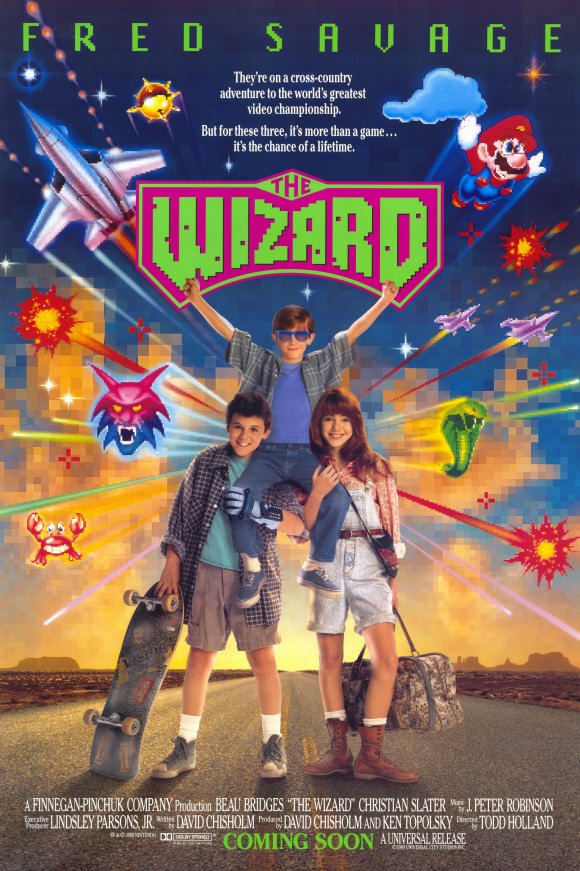
    Things Promised But Not Delivered by the Poster for the 1989 Film The Wizard

    In the end, I learned a valuable lesson about advertising.


    1. A world where all pre-teens wear shorts with long-sleeved, long-tailed shirts on top.
    2. A Far-Off Place style adventure where three white children are stranded in a hostile environment with only a skateboard, a suitcase and winning smiles.
    3. Something that actually might have made me smile, now that I think about it.
    4. An adventure in which only Jenny Lewis thought to bring a change of clothes.
    5. Video game characters magically coming to life, perhaps as a result of a desert heat-induced hallucination.
    6. An inexplicably off-model Mario that’s approximately the size of a fighter jet.
    7. And he can fly.
    8. A fictional pop cultural landscape where the anonymous green cobra enjoys the same level of fame as with Mario.
    9. Fred Savage using the Power Glove to face-punch bad guys he meets in the desert.
    10. No appearance by Christian Slater whatsoever, because who would cast him in a movie of this era and then not put him on the poster?
    11. A movie that takes place somewhere more interesting than Reno.
    12. A young Jenny Lewis incurring an exit wound.
    13. Maybe a story about a blind paraplegic, based on that pose.
    14. More top billing roles for Fred Savage.
    15. An actual wizard.