Pages

Showing posts with label video game music. Show all posts

Sunday, June 26, 2016

The Deep Legend of Purple Zelda

Discussed herein: the original Legend of Zelda, the band Deep Purple, the man responsible for what are arguably the two most famous compositions in video game music history, and open-ended questions about music law.

legend of zelda deep purple

Last week, a Los Angeles jury concluded that no, Led Zeppelin’s “Stairway to Heaven” did not plagiarize another song—or, at least, appropriate enough of that other song to constitute plagiarism and subsequent monetary compensation. Led Zeppelin got to continue living atop a towering pile of money that did not become a slightly-less-towering pile of money, and the 1960s band Spirit got a neat little footnote in its history when the estate of the band’s singer, Randy California, unsuccessfully tried to argue that a brief snippet from the intro to “Stairway to Heaven” sounded too much like Spirit’s 1968 song “Taurus.”

Neither being a member of that jury nor someone who claims to understand music on a constructional level, I can’t say whether that verdict was just. I can say, however, that to my ears, the two songs sound similar enough that it seems that the one could have helped bring about the other, regardless of whether anyone deserved money for that inspiration.

Listen for yourself. The “Stairway”-esque part of “Taurus” begins around the 44-second mark.


And here is “Stairway to Heaven,” just in case you’ve been living under a rock for the last forty years.


The plaintiff’s lawyers had claimed that because Spirit had played on the same bill as Led Zeppelin back in the day, it was plausible that members of the latter had heard “Taurus” and therefore used bits of it in writing “Stairway,” which was released in 1971. In my head, that seems like a fair enough argument, and I feel like people following the story in the news probably did too, especially in light of how the family of Marvin Gaye successfully sued Robin Thicke, to say nothing of similar squabbles making the news recently. (Tom Petty vs. Sam Smith comes to mind, even if it ended amicably, and now Ed Sheeran is being sued for alleged plagiarism as well.)

These kinds of stories stand out to me because I’m the kind of guy who frequently hears similarities between two songs that other people dismiss with “No, that’s just a common chord progression” or “No, that’s just a feature of this genre of music” or “No, you’re crazy.” For example, I think the old song “Smoke Rings” sounds remarkably like a downtempo version of the overworld theme from Super Mario Bros. 2.


I’m okay with accepting that the connection I’m making only exists in my head, but there’s this one similarity in particular that always jumps into mind when I read stories like these, because I think it’s a stronger connection to most: the Deep Purple track “April” and the dungeon theme from Legend of Zelda. And yes, there’s something slightly more thrilling to me about the prospect of a song working its way across the pop cultural continuum and ending up in a video game, at least in some form, years later.

“April” is the final track to Deep Purple’s third album, released in 1969. It’s a doozy. You probably know Deep Purple as the bad that performs “Smoke on the Water” or the hard rock version of that song from I Know What You Did Last Summer, but “April” is worth a listen too. It’s grand and orchestral, especially in its intro, and wouldn’t be out of place as the soundtrack to some medieval fantasy sequence, I say.


Or maybe that association comes from the apparent Legend of Zelda connection. At around the 2:00-mark in “April,” there’s a brief section that should sound familiar to anyone who played through the original Legend of Zelda for the NES. It’s the bit that concludes the game’s dungeon theme before the track loops back to the beginning. (That dungeon theme isn’t very long, and if you played through the game, you’d hear this section of music hundreds of times over.)

I made a video that lines the sections up side-by-side, in case that’s helpful.


Given my history of the playing “thing is like other thing” game, I’d be willing to write this similarity off as a random, meaningless one, but there’s slightly more to the story. Koji Kondo is the music whiz responsible for a lot of Nintendo’s most memorable compositions, including all the music for the original Legend of Zelda. What’s interesting about the Deep Purple connection is that Kondo himself has admitted to being a fan of the band. In a 2005 Nintendo Power interview, Kondo even said he once played in a band that frequently covered Deep Purple, so the odds that he would be familiar with “April” would be fairly high—at least as probable as Led Zeppelin having heard “Taurus.” Of course, in the end, the jury found that Zeppelin hadn’t stolen those guitar riffs—or at least that if they had, they weren’t substantial enough to warrant Zeppelin having to pay off anyone as a result.

I suppose, then, that I have to conclude this post on a note of confusion. I don’t understand how we can make a legal differentiation between homage, sample, legitimate borrowing, and lawsuit-worthy theft. (And yes, I have thought about how it’s notable that the multimillion-dollar exception to the rule would be a song titled “Blurred Lines.”) So I pose the question to anyone reading this who understands music or music law better than I do: Am I confused because these distinctions are better made by people who understand music on a fundamental level that I don’t? Or is it just that no one knows—and that every post-“Blurred Lines” lawsuit is gambling in favor of the odds of some judge or jury saying, “Yeah I hear it. Here, have a wheelbarrow full of money”? Is it weird that laypeople, musically speaking, would ever be given the opportunity to issue a verdict about something that seems like it should take inside knowledge of the music industry to understand?

Meanwhile, I keep “April” on my playlists in case I ever encounter a situation that needs to feel more epic. And every time I get two minutes in, I get to think about Legend of Zelda, whether or not it’s just a coincidence.

Miscellaneous notes:
  • Yes, this is was something I’ve written about on this blog before—eight years ago, in fact. I decided the Zeppelin lawsuit made the story timely enough for an update and expansion. I originally came across the info in the “cloubush” thread, which, eight years later, is still going strong.
  • There actually is a purple Zelda, literally. Her name is Hilda. She’s Zelda but purple. Go figure.
  • Koji Kondo composed the soundtracks for Super Mario Bros. and Legend of Zelda but not those for Metroid and Kid Icarus. He did, however, do the music for three early NES games that weren’t released in the U.S.—Mysterious Castle Murasame, Devil World and Shin Onigashima. Given how iconic the Zelda and Mario themes ended up becoming, we American gamers missed out.
  • Kondo also composed the music that ended up in Super Mario Bros. 2, and I wonder if the Deep Purple thing makes it anymore likely that he would have been inspired by “Smoke Rings” in creating that game’s soundtrack.
  • In 1970, Spirit released an album saddled with the improbable title Twelve Dreams of Dr. Sardonicus, and that’s one of those names that seems like a joke on The Simpsons.
  • Not that I nor anyone else actually needs to hear “Stairway to Heaven” again, but did you know that Dolly Parton does a cover of it? It’s actually not bad—not that Dolly is capable of bad things—and I wager she finds a layer to it that other cover-ers may not.
  • Spirit’s biggest commercial hit was 1968’s “I Got a Line of You,” which I’d heard before and which I’m surprised was done by the same band that did “Taurus.”


Video game music, previously:

Wednesday, August 27, 2014

Deirdre in the Final Dungeon

Today marks the twentieth anniversary of Earthbound, a thoroughly strange Nintendo game that pits plucky psychic children against animate gas pumps, irate old women and, finally, an intangible space demon. I’ve written a bit about the game over the years, and most recently about a weird intersection it makes with Ric Ocasek that would tumble around in my head for years before I’d figure out the connection.

via

You see, Earthbound composer Keiichi Suzuki made an unusual decision in making the game’s soundtrack: He used samples, many of which came straight from popular songs, and that’s just not something you heard often during the sixteen-bit era. Just recently, I found a video that explained which of the game’s compositions drew from major, mainstream songs by bands like The Beatles.


If you fast-forward to the 4:07 mark, you’ll hear that the game samples “Deirdre,” a Beach Boys song from the band’s 1970 album, Sunflower. This is an album I know. This is a song I’d heard before. But I’d never recognized it in the music for Earthbound’s final dungeon until the video pointed it out.

For long-play comparison purposes, here’s the full track of “Deirdre.”


And here’s “The Place,” the music for the final part of the Cave of the Past.


The Earthbound track isn’t particularly catchy. It’s atmospheric and strange, but it’s basically just a collection of variations on that one Beach Boys sample — the one right at the beginning where they’re singing the name Deirdre. Nonetheless, I liked the track, and it stuck in my head longer than a lot of the other Earthbound music. I wonder if it did because on some subconscious level I knew it was familiar.

Hmm.

Speaking of Earthbound’s strange pop culture connections, there’s one that still hasn’t been solved yet. The game opens with a scene of UFOs destroying some American everycity. (Notably, no event like this actually occurs in the game.)


That guitar, it has been determined, was supplied by none other than Mario’s daddy, Shigeru Miyamoto, even if he’s identified in the end credits as M.D. Seeger. But twenty years later, no one knows what the image is supposed to depict. It sure looks like a digitized photograph and sure seems like something that was also drawn from pop culture, but no one seems know where it might have come from.


Do you?

Tuesday, August 12, 2014

Left-Handed Ghosts and Familiar Music

Short version: the right idea, but the wrong video game franchise.

More than two years ago, I posted here on this blog about a Japanese disco track that sounded to me like something I’d heard in a video game — specifically something dire and commanding and urgent, like you might hear during a boss battle. It’s the 1978 song “Southpaw” by Japanese band Pink Lady, and the part I’m referring to happens just in the first few seconds.


Did you hear it? It’s the part that starts around the nine-second mark. I always heard it, but for the life of me, I couldn’t figure out why it sounded familiar. And then just this week, someone pointed out to me why: Ghosts ’N Goblins.


Again, did you hear it? Just right at the beginning.

“Southpaw” predates Ghosts ’N Goblins by seven years, so if anything, the composer of the game’s score would have been paying tribute to the Pink Lady track. I’m not sure it’s any more than a coincidence, but at least this settles why a Japanese pop song from before I was born sounded like something I should already know.

To end your day on a highest of possible notes, here is Pink Lady performing their 1977 hit “UFO” in a video that seems to have been filmed on their apartment complex stairs.


And here’s a talented sight reader playing the Ghosts ’N Goblins theme in a ragtime style so naturally that you’ll have a hard time believing he’d never laid eyes on the sheet music before.


Video game music, previously:

Sunday, August 3, 2014

The Pleasurable Irritation of Misplaced Nostalgia

On one hand, this post may appeal especially to the video game-literate members of my audience. On the other, it speaks to a larger sensation that I'm sure we have no word for.

Here is Rene Aubry’s “Seduction,” an instrumental piano piece that I heard yesterday on KCRW.


Now, please, what does it sound like? Aubry released the song on his 2013 album, Forget Me Not, which means that whatever I’m thinking of mostly likely came out before, but something about this song triggers my nostalgia sensors nonetheless. Just given my own history, it’s likely whatever it reminds me of came from a video game, just because a life playing video game has meant a lot of time listening to instrumental “wallpaper” music. To me, the Aubry song sounds like a minor key version of something in a major key, but for the life of me I can’t say what.

Is it this? Is it this? Does this trigger anyone else’s nostalgia sensors? This is driving me crazy, but in a way I don’t especially mind.

Friday, January 24, 2014

It Was Luigi in the Dining Room With the Vacuum Cleaner

There’s a certain thing that happens online among video game-oriented people, where someone posts a clip of some game music that everyone has heard a billion times and says “OMG, this song is *TOTALLY* this OTHER SONG! #ripoff” It happens often, and I've been guilty of it too in the past, but after reading enough responses from people who better understand music — “No, this is a standard chord progression,” “No, this is an established musical trope,” “No, your two years of piano lessons do not give you the authority to decree this Final Fantasy music as a ripoff” — has prompted me to state these similarities more in the context of “Hey, this thing is like this other thing. Isn't that neat?”

And it’s with that very notion that I present to you this clip from the 1985 film Clue, with gentle encouragement to listen to the music that plays at the exact moment the eight main characters split up to explore the mansion.


If you’re like me and Nintendo still plays an unusually large role in your life, then that music might just sound familiar -- in both tone and context.


Above is the main theme from the beta version of Luigi's Mansion, Nintendo’s 2001 title that had Luigi cautiously sneaking around a spooky mansion. (For comparison's sake, here’s the final version of the theme.) He was looking for ghosts, not murderers like the Clue kids were, but I think the music sounds strikingly similar, especially considering the context. (The Luigi’s Mansion soundtrack consists almost entirely of different variations on that same melody. If there’s one where the instrumentation sounds more like the Clue soundtrack, I’m all ears.) I’m not saying “OMG ripoff,” of course. After all, what other musical cues would you consider for a scene in which characters explore a spooky mansion on a dark and stormy night? I just enjoy this little similarity between two pop culture entities that I wouldn’t have linked before, and I'm curious to know if anyone else hears the resemblance.

Myself, I don’t think I could watch this part of Clue now and not think of Luigi’s Mansion. All this via a tweet by Brad O'Farrell that sparked my interest.

Also of note: Guile’s Street Fighter II theme and The Square’s 1984 track “Travelers” (via), and the Super Mario Bros. 2 overworld theme and this version of “Smoke Rings.”

Video games and pop music, previously:

Tuesday, May 14, 2013

Jeux Sans Frontieres (She’s… So Popular)

For a long time, I hated Peter Gabriel’s “Games Without Frontiers,” but much in the way that the opening scene of The Americans reignited my love for “Tusk,” the season finale made me rethink this song. It helps that I now know that Gabriel was using this real-life game show as a metaphor for war, and that he actually had precise referents in mind with the line, “Suki plays with Leo / Sacha plays with Britt / Adolf builds a bonfire / Enrico plays with it.” I don’t think it’s as clever as the world’s biggest Peter Gabriel fan might, however, and the implications of the line “Whistling tunes while we’re pissing on goons in the jungle” are still too awkward to talk about.

It turns out there’s an additional reason to make peace with “Games Without Frontiers,” I just learned. The song also happens to be the theme song to The Race Against Time, a video game for the Commodore 64, ZX Spectrum and Amstrad CPC systems. The title was released in support of Sport Aid, the same event for which the Tears for Fears song “Everybody Wants to Rule the World” was released two years earlier. The Commodore 64 version of the song sounds exactly how you’d expect it to, but that’s no reason not to listen. Here, come on:


See, you don’t even miss Kate Bush on back-up vocals.

Video games and pop music, previously:

Friday, November 2, 2012

How a Cool Video Game Sounded in 1988

Does everyone suffer from the strange syndrome in which the duration of a memory has little correlation to the significance of the event that caused it? I’ll assume everyone does. I would rather that I’m not the only one whose memory works like an unsorted junk drawer. So, then, just this week that weird memory thing that we all suffer from put into my head some video game music that I hadn’t heard since the late 80s. Here, you put it in your head now:


It’s from Wizards & Warriors II, a game that I completed but which never really grabbed me like your Marios and your Mega Mans. In fact, only re-examining it now do I realized that it was developed by the crew that would eventually make the Donkey Kong Country games, which I loved. It’s the same composer, in fact, and I feel like you can hear some similarities with this opening ditty and some of the tracks from those Donkey Kong games, which often sounded somehow more epic and less cartoony than a game about banana-grabbing simians should have merited.

I lack the musical know-how to state whether this track exhibits a higher-level of compositional quality than most video game music and therefore that is why I remember it, but it nonetheless starts playing in my head every three or four years or so. I wonder how long this will continue.

At least I’m not the only one who remembered it. Dana Harris, a composer, reworked it with updated technology to give it an older sound.


In the second version, it occasionally sounds like Prokofiev’s “Montagues and Capulets,” no?

Sudden bursts of video game music nostalgia, previously:

Thursday, June 14, 2012

Danger in Deling City

I’m going through a Serge Gainsbourg phase. That’s something awful people say to indirectly tell you that they’re classy, worldly, cultural, hip and other adjectives that, when combined, usually equal awful. Nonetheless, it’s true. I have been listening to him lately, because in spite of the pretentious people who may count him among their most recent obsessions, he’s actually quite phenomenal. In fact, he’s so good that you can be a non-French-speaking person who’s missing out on his expert worldplay and still enjoy his songs, and that’s saying quite a bit, seeing as how his lyrical prowess is one of his best qualities.

The song I’m posting today, however, is instrumental, so you monoglots and francophobes needn’t worry any.

Gainsbourg scored the 1970 Anna Karina film Cannabis, and one of the tracks happens to be one of my all-time favorites of his compositions. It’s titled “Danger.” Here it is:


But the thing about this track is this: It’s good on its own, but every time I hear it, I think of a track from a video game soundtrack I played years ago: “Under Her Control” from Final Fantasy VII. Here’s that one:


Can I explain why one makes me think of the other? No, not really. There’s not one specific detail about the former that I could say reminds me of the later. However, the whole gestalt of the Gainsbourg track nonetheless makes me think of the one my Uematsu. It’s certainly not the first time I’ve heard something “legitimate” in something from a video game, but somehow this one seems to linger more heavily than the others.

Anyone?

Tuesday, January 3, 2012

Decisive Battle (of Musical Trivia)

Fellow nerds, help me out.

So I like Pink Lady, the Japanese duo who scored big in the late 70s and early 80s and, as I noted in a now-years-old post, ultimately wound up on a variety show on NBC despite the fact that neither member spoke English. (It’s quite the story, actually. Do click through to the original post, if you value from truly bizarre east-meets-west pop culture fusion.) And I recently happened upon a cache of Pink Lady videos on YouTube and caught the follwing rendition of “Southpaw.”


The music at the beginning — from 0:07 onward especially — reminded me of a Final Fantasy battle theme, but I can’t remember which. I can hear it in my head, but I just can’t place the game it came from. I poked around some more on YouTube and ended up with what seems to be a remade, hyped-up version of one of the original NES Final Fantasy tracks.


And this is pretty close, I guess, but the thing is I never played this glossy version of the original Final Fantasy. So is this it? Or is it a different battle theme I’m thinking of? If it is, in fact, this Final Fantasy 1 song, I’m guessing that the game music was a tribute to Pink Lady, since “Southpaw” came out in 1978, nine years before Final Fantasy taught the world about Red Mages and Bahamut. I eagerly await your thoughtful responses on this most urgent matter.

In testament to the greatness of Pink Lady, I’ll point out that they’re one of only two Japanese artists to ever appear on the American Billboard Top 40, the other being Kyu Sakamoto, whose 1961 globe-spanning hit found considerable success in the U.S. as “Sukiyaki.” (The song’s path from a tearful Japanese song to an American hit about a stewed beef dish made for another previous post on this blog, by the way.) Here’s that one American-approved Pink Lady song, “Kiss in the Dark”:


Clearly, it did well with the disco crowd. It’s all the more impressive to me because the Pink Lady singers were singing the translated, English lyrics phonetically. Truthfully, they hadn’t a clue what they were saying, not that their performance reflects this.

But yes — nerds? What say you?

Video games and pop music, previously:

Sunday, December 11, 2011

The Pixies and the War on Drugs

I have a soft spot for the late 80s. And in saying that, I actually mean that I have a soft spot for the pop culture of the 80s and not my existence during that time, which was largely marred by being underweight and consistently wearing a lot of Gecko Hawaiian clothes. Whatever. Mixed feelings be damned, here’s a nifty follow-up to my post yesterday about Owen Pallett paying tribute to an obscure Super Mario ditty in one of his feats of indie rock artsiness. The Pixies did the same, it turns out.

Here is NARC, an arcade game I remember being frustrated by back in a hometown pizza parlor:


There was also a port to the Nintendo console that I fared better at, but it was a game my brother took to more than I did. Aside from standing out for being more violent than most games I played back in the day — I’m guessing it was around 1989 or so that I actually laid hands on it — I remember the game’s theme song sounding a lot more like actual rock music than most video game soundtracks ever did. It turns out Black Francis felt the same way. His band, The Pixies, covered the NARC theme as a B-side to the 1991 single “Planet of Sound.”

Here are the two tracks, side by side:


If I ever heard this Pixies track before, I didn’t note the similarity. It’s not in my MP3 collection and I assume I’ve just gone this far in life without having heard it, because if I saw the name I probably would have wanted to listen to it. In fact, I only found about this odd little exchange between video games and music because I blog I follow, VGJunk, happened to have posted about this very subject, and I stumbled onto the post more or less randomly a few hours after I put up the Owen Pallett-Super Mario Land weirdness. Funny how that happens.

Video games and pop music, previously:

Saturday, December 10, 2011

Midday to Midnight

It makes me happy that years of geeky pursuits have trained me to notice things most other people wouldn’t. Like music. From a bygone Game Boy game. Getting covered (sampled?) by an indie rock musician that lame people don’t know about.

I present to you: the “Star Maze” music from Super Mario Land 2: Six Golden Coins making an appearance in Owen Pallett’s song “An Arrow in the Side of Final Fantasy.”


After a few abortive attempts, I’m finally appreciating Pallett’s solo stuff. Pallett — who ride that Arcade Fire rocket to greater fame and who released the song when he was still calling his solo side project “Final Fantasy” before he decided it was better to be, you know, Googleable — has never shied away from his video game influences. In fact, his song “Hey Dad” employs the Super Mario Bros. 3 “Coin Heaven” melody at the beginning — and fairly beautifully, I should add. But a lot of people could hum the Coin Heaven music if they were asked. No one really gives a damn about Super Mario Land 2 — it was the the one where Mario could grow rabbit ears, people! — so this is definitely the greater find.

Thursday, September 1, 2011

The Puppets Are Apparently in the Forest

(Apparently I’m starting September by firing the geekiness in full force.)

I have this thing where I like something and then find out the thing I like seems to be referencing something else that I liked long ago and had forgotten about. It’s strange, because I end up wondering if my liking of this later thing has resulted from my own conscious processes or something deeper and less deliberate. I suppose the jury will remain out on that matter. Also, I’m a TV geek. And a video game geek. And, inasmuch as one can be when one lacks any aptitude for it, a music geek. And today’s post hits all three pegs.

Long, long ago, I saw a few episodes of The Storyteller, a Jim Henson-produced TV series that employed puppets to tell old tales from various world folklores. I can’t even remember how I first saw this, and given the show’s BBC affiliation, I think it might have been during one of my childhood stints in New Zealand. But I did see it, and I loved it, even if I more or less forgot about it in my later life. Then, slightly less long ago, I played a particular video game, Super Mario RPG, this wonderful team-up between the people who gave me Super Mario Bros. and Final Fantasy. It had an especially memorable soundtrack for a video game, and to this day, years later, I find these tunes sneaking out of my lower brain registry, into my consciousness and then into my humming mechanisms. (I feel like people wonder what I’m humming and why it tends to loop.) So imagine my great surprise when it was pointed out to me that the Storyteller closing credits theme song greatly resembles one of the more stand-out tracks from this video game.

(A break: I generally refrain from posting those kind of “OMG this song rips off this other song OMG!” posts, mostly because I don’t have the greatest technical understanding of music, despite seven years of piano lessons. It mostly comes down to a fundamental failure on my part to “get” music. For all I know, the similarities I’m hearing in certain pieces aren’t actually that remarkable but instead are just indicative of typical, standard chord progressions and whatnot. Regardless of my musical ineptitude, I’m pushing this one on you. Decide for yourself.)

So here they are, side-by-side: the end credits theme from The Storyteller and the forest music from Super Mario RPG:


I mean, aren’t they strikingly similar? If the video game one doesn’t cut it for you, imagine its more primitive, digital instrumentation replaced by the real deal. Then, now, imaginative one, can you hear it?

In case you don’t, I’d like to point out two major reasons why I’m not crazy. First, the Super Mario RPG theme plays during the point in the game when the player is wandering through a forest, chasing Geno — the blue-cloaked character in the video image and a very Pinocchio-esque character who starts out as a wooden puppet and then comes to life. Yes, a puppet — not a Muppet but still. In the context of a Jim Henson cultural connection, that seems noteworthy. Secondly, the name of the video game track is “Beware the Forest Mushrooms.” Doesn’t that sound like the title of some old world fairy tale? Doesn’t that sound like the warning some headstrong Eastern European orphan would not heed, therefore brining about his own demise? The song title ties in with the game, yes, but couldn’t it also be a nod to the composer’s inspiration?

And if you outright pooh-pooh the idea that video game music or even video games in general could have a cause-and-effect relationship with “higher” pop culture, then consider this: The composer, Yoko Shimomura, went on to do more video games, including a sequel to my beloved Secret of Mana games. One of the songs from this game ended up getting sampled in a Janet Jackson song.


And that’s pretty weird on its own.

Thoughts?

Tuesday, July 26, 2011

Chariots of Kong

Worth noting: The composer of the Donkey Kong Country games owes a debt to to Vangelis’s “Antarctica,” at least for Donkey Kong Country 2’s Arctic Abyss stage. Compare:


If not for the sonic similarity, then that each were created to soundtrack beautiful, frozen lands.

Wednesday, July 20, 2011

Marta and Luisa Throw a Dance Party

Hey there. Meet the Great Giana Sisters.


Look familiar? No? How about a different perspective:


Get it now? Yes, these sisters are distaff rip-offs of the Mario Bros., and not just because they’re a pair of Italian siblings staring in a video game. The level design in The Great Giana Sisters so closely resembles that in Super Mario Bros. that Nintendo sued it off the shelves after its release. Kotaku just did a “Hey! Remember old stuff?” post on it this week, and though I’ve known about this game for some time, I’d never actually seen it in motion. So I watched, but more importantly I listened. Given that the game was released in 1987, I’m damn impressed with what it did with tinny eight-bit sound.

Give the title track a spin:


At the beginning, it sounds a lot like the opening theme to an Italian horror movie from that wonderful late 70s-early 80s time period that I’m so fond of. At about the 0:45 mark, it breaks down into something else that I noticed even more in this track:


I could be way off on this, but doesn’t this sound remarkable like most of the parts of certain electro-indie bands playing today? I’m getting a distinctly Crystal Castles vibe here — much more so than I get from other dance, chiptune-inspired and -influenced stuff out there. (And yes, by the way, there is an old school video game named Crystal Castles, and no, that isn’t where the band gets its name.) I think it’s a profound similarity, just filtered through the comparatively primitive sound-processing abilities of the ZX Spectrum game system. Compare, oh, say “Crimewave,” for example.


Do you hear it too? Is my brain pixels? Should by electroclash band be called Is My Brain Pixels?

In closing, I would like to note that it was almost a year ago that I put up a post in which I theorized that the faux eight-bit sounds of Mega Man 9 sounded weirdly like the Scissor Sisters.

Tuesday, July 27, 2010

Mega Man in Glam Rock Land

Warning: This post examines Night Work, the new Scissor Sisters album. Related YouTube clips feature the album artwork, so there will be Robert Mapplethorpe butts throughout. Enjoy!

In the month since Scissor Sister’s newest album dropped, I’ve been listening and enjoying it, certainly more so than the sophomore effort, Ta-Dah, and almost as much as their debut. And that says a lot, since the first album got a lot of play in my car, on my iPod and anywhere I felt could benefit from a beat. But something about the whole Night Work album reminds me of video games — old-school Mega Man in particular — and I can’t determine what.

Maybe it’s the thumping synth beats. They give a specific energy to the songs that’s not unlike what would propel players through early-generation video games. The soundtracks to the Mega Man games themselves often mimicked rock and pop music of the day — the Elec Man stage music sounds suspiciously like Journey’s “Faithfully,” for example — so I suppose it could follow that Scissor Sisters would produce a similar sound as they fuse together genres like glam rock, disco and new wave and then zap the result with digital magic. The notion of Night Work having an overall Mega Man-like sound, however, doesn’t satisfy me. As I listen to its tracks, specific parts of certain songs trigger memories of Mega Man hopping and shooting through levels. I just can’t remember which levels in particular. And in posting this I’m hoping others who have noted the similarities can help me out.

So far, I have pinpointed one similarity: “Sex & Violence” and the music from the Splash Woman stage in Mega Man 9. Listen for the synth melody that begins at the seven-second mark in the Scissor Sisters song and compare it to the whistle-like melody that starts in the Mega Man song at the thirteen-second mark.


Not a perfect match, but if the melodies were played by the same digital instruments, I think the similarity would be striking.

I also hear something in the especially tinny-sounding digital effect that starts around 1:42 in “Any Which Way,” but I can’t place it.


Anyone? Anyone?

Two more connections, neither of them video game-related: the blatantly sexual “Harder You Get” plays very similarly to a strange and very raunchy disco track, “Walk the Night” by — ahem — the Skatt Brothers. (Funny story: I either downloaded “Walk the Night” on accident or while drunk, because I had no memory of it until it started on the iPod one day and filled my unsuspecting ears with some explicit and violent sex talk — the aural equivalent of an ambush biker gangbang.) Check the sung part in the Scissor Sisters song at 2:16 and the almost identical part in the Skatt Brothers song at 3:35, but maybe don’t do so at work unless your office permits the discussion of rough sex.


The track “Invisible Light” also caught my attention. It’s good, and most reviews of Night Work have noted the novelty of its “Thriller”-style spoken word segment, courtesy of Ian McKellan. (It starts around the four-minute mark.) Just prior to buying Night Work, I bought some tracks by La Roux, including “Tiger Lily,” which was announced as a single only a few days before Night Work was released. “Tiger Lily” also features a spoken word section. (It starts at about 2:20.)


Two tributes to Michael Jackson’s greatest song, maybe? The timing would work out to about right.

Finally, I must confess that the only track from Night Work I despise, “Fight Fire With Fire,” happens to be the first single. I yanked it from my playlist after about two listens, and I’m baffled by the decision to lead with this. If you’ve only heard this one, give the rest of the album a spin as well — it’s infinitely better. I mean, hell — I enjoyed Night Work enough to spend this much time thinking and writing about what could have inspired it, right?

If only the Scissor Sisters had some emblematic tie-in with the Mega Man universe to bring all this together… Oh, wait.

Game geek? Subscribe to the video games-only feed for Back of the Cereal Box.

Saturday, June 26, 2010

The Future Is the Reward

I downloaded this song months ago and haven’t tired of it yet. It’s “Black Magic” by Magic Wands, from 2008. And I think it may be a winner.


I put it somewhere between the late Breeders and the early Pixies. Is it me, or do the lyrics recall video games on some level? Yeah, I know: everything takes me back to video games, but read the words and consider for yourself:
There is a crescent key
That locks a hole in the door
Into the pit of your heart
The future is the reward
White light, my time has come
All night, out on the run from black magic
Black magic

Give me the final piece
That holds the puzzle’s end
Of all the billions of stars
That are the dreams of your friends
How could anybody feel the same?
Black magic

It is the person’s eyes
That have the answers in
Around the galaxy Mars
A new place to begin
White light, my time has come
All night, out on the run
From black magic
Admittedly, boo on “the galaxy Mars.” But still?

Tuesday, February 9, 2010

Jump (Into Pipes)

It may be one short, “citation needed” sentence in the Wikipedia entry for the Super Mario Bros. theme, but it was enough to get me thinking. It claims that there’s a certain resemblance between the song and Van Halen’s “Jump” and it’s rumored that the latter at least partially inspired the former. I’d never heard this before and couldn’t find it anywhere else online, but I have to admit that listening to “Jump” now, I can hear a slight similarity between the opening synth notes and the basic melody of the Mario song.

Give it a go yourself:


The timing works out, more or less, since the Van Halen song would have come out around the time the people at Nintendo would have been putting Super Mario Bros. together. And not that it means anything one way or another, but it’s worth pointing out that the song is called “Jump” and jumping is the essence of gameplay in most Mario games.

Monday, June 30, 2008

Stuck in an Elf Village

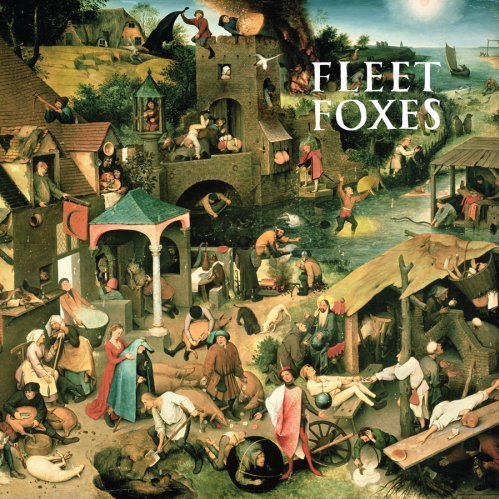
After I posted the bit about Coldplay, Creaky Boards and Legend of Zelda in which I marveled at the strangeness of a non-electronic rock band actually crediting video game music for having inspired a song, I realized that I had forgotten something I had read in Rolling Stone just a week ago: Harmony-happy rock band Fleet Foxes credited the game Final Fantasy alongside Simon & Garfunkel and Beach Boys bootlegs as having influences their sound. Said band frontman Robin Pecknold:
Those Japanese games had these dense and mysterious soundscapes... A song would just loop the whole time you were in an elf village or whatever. It was catchy and mysterious — that sounds like good music to me.
Final Fantasy. Fleet Foxes. It’s at least alliterative. That’s always a good start. Again, as with the relationship between Creaky Boards and Legend of Zelda, the influence isn’t as pronounced as you might expect, but, in the end, that’s a good thing.


In general, the songs don’t work in a way that you might end up humming them, but they’re lush and evocative of something grand and sweeping. It’s hard to use the term “soundscape” without sounding a little pretentious, but then again it’s hard not to sound pretentious while raving about how a childhood favorite has resurfaced in a cool new band. The songs also could serve well as background music to something else — not unlike what you might hear in Final Fantasy. For those of you for whom Final Fantasy wasn’t part of your formative years, this all means nothing. You still might like Fleet Foxes anyway, provided similarities to the aforementioned bands and Crosby, Stills, Nash & Young aren’t a turn-off. For those of you with even a basic knowledge of Black and White Mages, I urge you to check the band out, especially the tracks “Quiet Houses” and “Ragged Wood,” which reminded me most of those looping old melodies.

The only Fleet Foxes track I could find attach to a YouTube video was “White Winter Hymnal,” which is also good. Enjoy!


EDIT: Since this went up and since Fleet Foxes sort of blew up in terms of popularity, YouTube clips for “Quiet Houses” and “Ragged Wood” have made it online.