Pages

Saturday, May 2, 2009

Shakespeare’s Scabby, Flabby Onion

I had something else planned out for this week’s word: a French-derived beauty whose melodic sound was matched by a pleasant definition. Then I began to feel that the word was not appropriately strange — wonderful though it might have been. This happens sometimes. Perhaps I’m underread. Or it could also be that I just blow past certain words, never properly grasping what they mean and otherwise ignoring them until I happen across them in dictionaries, the letters in sequence finally laid out side-by-side with pronunciations and definitions. Whatever the case, you will not be reading much about reverie, “a state of abstract musing, a daydream,” here today. In its place is something foul andmean-spirited, though every bit as French in its origin.
ronion (RUN-yun) — noun: a scabby or mangy creature.
Merriam-Webster claims use of the word — which is also often spelled ronyon and less often runnion — dates back to at least 1598. The most popular usage, however, seems to be Shakespeare’s The Merry Wives of Windsor, first published in 1602. Mister Ford hurls the term at Falstaff, who is dressed as a woman at the time. The line, in full, reads as “Out of my door, you witch, you rag, you baggage, you polecat, you ronion! Out, out!” It’s an interesting string of words. Some editions use hag instead of rag. All that I saw use baggage, which American Heritage Dictionary claims ca be used to mean “a prostitute” or “an impudent girl or woman.” It’s a new one to me, and I wonder if has any connection to the insult old bag, which I had previously assumed referred more to the recipient’s resemblance to a formless, leathery sack than to their personality.

Most dictionary definitions put the etymology of runion as a possible relation to the French rogne, “scab.” And indeed that would be insulting. Peter Bowler’s The Superior Person’s Book of Words, however, notes that the word may instead come from the French rognon, “loins,” and could therefore imply fatness. The word appears again in Macbeth, in the First Witch’s line “‘Aroint thee, witch!’ the rump-fed ronyon cries,” and would seem to be implying this second interpretation rather than what the word has come to mean. Not that it gets used all that much anymore.

I prefer the spelling ronion over alternatives, if only because I’d imagine most women wouldn’t appreciate being compared to onions, what with their round shape and their layer after layer of acird-smelling surprises. Besides, the existence of bunions and Funyuns has taught me to expect bad things from anything whose name consists of a consonant in front of the word onion.


Previous words of the week:

Friday, May 1, 2009

Cherche Severine Désespérément

My seventh-grade teacher somehow got the notion into her head that her twenty-four students deserved to have penpals. No, not recently. This happened when I was actually in seventh grade, and for the life of me I could not say what led her to this conclusion. This teacher — who I’ve previously described as a woman who taught us about geography, medieval times and hot air balloons at the exclusion of any other subjects, forcing most of us to re-take pre-algebra as eighth-graders — somehow contacted someone in charge of similarly aged youths in France and matched them up with us. We on the Californian end of the deal wrote the first letters, with the expectation being that the French children would respond and tell us about the mundane details in their life. American seventh-graders, it was apparently presumed, would be enthralled by lists of favorite sports and activities enumerated in broken English. This, it was decided, would help establish a lifelong relationship of forced sharing and forced interest.

For reasons I have never understood, I was the only student who received a response. Perhaps the 12-year-old me produced a particularly attractive class photo that year. Though I still have the letter somewhere, I’ve no clue where it could be. I can, however, offer a few details from it:
  • The girl’s name was either Severine Collin or Collin Severine.
  • She bore a striking resemblance to a girl in my class. This girl had been accused of stuffing her bra — whether accurately or not, I don’t know — and had therefore acquired the persistent nickname “Stuffy.”
  • Though I can’t remember what Severine Collin — or, again, Collin Severine — attempted to communicate about herself, I do remember that she decorated the binder paper she had written upon with cut-outs from a ladies’ clothing catalogue. Everyone was wearing blue. The only explanation offered was something along the lines of “See how nice dress the French!”
Clearly this mystery demanded a solution.

This girl would cross my mind at the strangest times, most often when a computer with internet access was not conveniently nearby. Finally, a few weeks back, I thought of Serveine Collin/Collin Severine while I was logged into Facebook. I searched for either variation on her name. More than thirty results came up, with nearly all of them being possible grown-up versions of the girl who sent me her class photo back in 1995. Who’s to say what that girl could have grown into in all this time? Would she have reason to become a woman with a daringly short haircut and huge sunglasses? The curly-haired woman with the fat baby? The scowler with the eyebrow piercing? I couldn’t say, remembering so little from the letter and, also, feeling that my twelve-year-old self had little bearing on what I am today. (This post would seem to contradict that statement, of course, but I swear that it is true.)

Each of the women received the following letter:
Hello.

You probably do not know me. I live in California. Around 1995, my school attempted a penpal program with a class of French children. I was 12 at the time. I do not remember what city these children lived in. We sent letters, but the only French student to write back was a mine: a girl whose name I remember as either Severine Collin or Collin Severine. I recalled this girl’s letter some time ago and decided I’d see if I could find her on Facebook. Could this be you?

The letter was sent to me or anyone else from a Catholic elementary school in Hollister, California.

More than anything, I’m just curious to see if I remember this girl’s name correctly and if the power of the internet could help me find someone I never met and only barely interacted with so many years ago.

If none of this sounds familiar, please disregard this message.
So far, I’ve only received two responses, so I have to assume that the Severines and Collins just take their time in responding to Facebook messages.

The first: a sleepy-eyed girl whose profile photo crops out the man she had her arms around. I’ve always been puzzled by such photos. Why represent yourself with a photo that you’ve cut to exclude that you embraced, at least at one point in your life? This woman, a Severine, said only this:

Photobucket

More recently, a second response came in, this one, from a woman whose face bore a slightly weary expression.

Photobucket

So that’s two down. I feel like none of the others are likely to respond, but I wanted to write this, if only to document that I made the effort to fine this person, whatever her name is. Don’t ask what I’d plan to do if I found the right girl. Maybe I just want to test the power of the internet. Maybe I want to establish some connection with my past in a way that I haven’t consciously processed. Of course, I suppose that, on some level, I want to know why she wrote back when none of her classmates seemed to. Regardless, I’m still waiting.

Thursday, April 30, 2009

Moony Face

Check out my interview with Mike Doughty, in which he talks about work on his two next albums — one acoustic titled Sad Man, Happy Man, and one a side-project involving dance music that may or may not be titled Dubious Luxury — as well as about his new West Coast tour, The Question Jar Show.

Something Like or Pertaining to a Bandicoot

The previous post, which deals with naming issues plaguing the swine flu, motivated me to locate as many possible animal-related -ine words that refer to animals. It may not surprise you that the list was bigger than I anticipated:
  • canine (of, like or pertaining to dogs)
  • feline (of, like or pertaining to cats)
  • bovine (of, like or pertaining to cattle)
  • taurine (of, like or pertaining to bulls)
  • equine (of, like or pertaining to horses)
  • elephantine (of, like or pertaining to elephants)
  • serpentine (of, like or pertaining to snakes)
  • lemurine (of, like or pertaining to lemurs)
  • porcine (of, like or pertaining to pigs)
  • piscine (of, like or pertaining to fish)
  • ursine (of, like or pertaining to bears)
  • vulpine (of, like or pertaining to foxes)
  • lupine (of, like or pertaining to wolves)
  • aquiline (of, like or pertaining to eagles)
  • butine (of, like or pertaining to hawks)
  • columbine (of, like or pertaining to doves)
  • asinine (of, like or pertaining to donkeys)
  • ovine (of, like or pertaining to sheep)
  • caprine (of, like or pertaining to goats or ibexes)
  • hircine (of, like or pertaining to goats)
  • leonine (of, like or pertaining to lions)
  • tigrine (of, like or pertaining to tigers)
  • vespertilionine (of, like or pertaining to bats)
  • ranine (of, like or pertaining to frogs)
  • acrine (of, like or pertaining to frogs)
  • lacertine (of, like or pertaining to lizards)
  • terrapine (of, like or pertaining to turtles)
  • geochine (of, like or pertaining to tortoises)
  • cervine (of, like or pertaining to deer)
  • rusine (of, like or pertaining to deer, but the Indian sambur deer in particular)
  • elaphine (of, like or pertaining to stags or red deer
  • elapine (of, like or pertaining to cobras)
  • strigine (of, like or pertaining to owls)
  • cancrine (of, like or pertaining to crabs)
  • turdine (of, like or pertaining to thrush)
  • icterine (of, like or pertaining to bobolinks)
  • delphine (of, like or pertaining to dolphins)
  • orcine (of, like or pertaining to killer whales)
  • corvine (of, like or pertaining to crows or ravens)
  • leporine (of, like or pertaining to rabbits or hares)
  • murine (of, like or pertaining to mice or rats)
  • anatine (of, like or pertaining to ducks)
  • anserine (of, like or pertaining to geese)
  • picine (of, like or pertaining to woodpeckers)
  • pavonine (of, like or pertaining to peacocks)
  • sciurine (of, like or pertaining to squirrels)
  • alopine (of, like or pertaining to arctic foxes)
  • musteline (of, like or pertaining to weasels)
  • latrine (of, like or pertaining to otters)
  • martine (of, like or pertaining to sables)
  • phocine (of, like or pertaining to seals)
  • myrmecophagine (of, like or pertaining to anteaters)
  • lyncine (of, like or pertaining to wildcats)
  • dasypine (of, like or pertaining to armadillos)
  • soricine (of, like or pertaining to shrews)
  • bubaline (of, like or pertaining to water buffalos)
  • bosine (of, like or pertaining to yaks)
  • helodine (of, like or pertaining to gila monsters)
  • castorine (of, like or pertaining to beavers)
  • larine (of, like or pertaining to seagulls)
  • cavine (of, like or pertaining to guinea pigs)
  • procyonine (of, like or pertaining to raccoons)
  • meline (of, like or pertaining to badgers)
  • musteline (of, like or pertaining to badgers)
  • hystricine (of, like or pertaining to porcupines)
  • macropodine (of, like or pertaining to kangaroos)
  • aegypine (of, like or pertaining to vultures)
  • pongine (of, like or pertaining to orangutans)
  • alaudine (of, like or pertaining to skylarks)
  • actinine (of, like or pertaining to sandpipers)
  • varanine (of, like or pertaining to monitor lizards)
  • gruine (of, like or pertaining to cranes)
  • crotaline (of, like or pertaining to rattlesnakes)
  • sarcophine (of, like or pertaining to Tasmanian devils)
  • viverrine (of, like or pertaining to civets)
  • passerine (of, like or pertaining to songbirds)
  • oscine (of, like or pertaining to songbirds)
  • aedine (of, like or pertaining to mosquitoes)
  • psittacine (of, like or pertaining to parakeets)
  • herpestine (of, like or pertaining to meerkats)
  • cricetine (of, like or pertaining to hamsters)
  • rhombomine (of, like or pertaining to gerbils)
  • glirine (of, like or pertaining to dormice)
  • acarine (of, like or pertaining to mites)
  • herpestine (of, like or pertaining to mongooses)
  • kobine (of, like or pertaining to waterbucks)
  • acipenserine (of, like or pertaining to sturgeons)
  • zebrine ((of, like or pertaining to zebras)
  • isodine (of, like or pertaining to bandicoots)
I’m honestly not sure how many of these get used with any regularity and just exist after having been formed by extension from the animal name’s Latin root. It doesn’t matter to me either way. My take: Once we beat swine flu, think how many other flus we can get.

Sources: this one, this one, this one, this one, this one, this one, and this one, the last of which actually offered far more animal words than I could bear to transcribe.

Speaking of animals:

Wednesday, April 29, 2009

Samurai in Chief

In late 2007, I wrote on this blog about Metal Slug and Samurai Shodown and all those other Neo-Geo quarter-crunchers of my youth that bombarded me with worldwide pop culture as reinterpreted by Japanese people. They were an education, those games, and I find again and again that I’m still learning from them today.

In this post in particular, I wrote about Samurai Shodown VI — released in 2005, long after I had reason to look for whatever arcades might exist anymore, anymore, maybe — and I focused on a certain character representing the American segment of that population of late-18th-century sword-swingers who crisscrossed the globe to either vanquish evil or promote it. (Such people truly did exist, if I’m to take seriously what video games tell me about world history. And I do.) The character’s name is Andrew, and nearly everything about him suggests that his creators based his design on that of Andrew Jackson, the United States’ seventh president.

Photobucket
andrew, patriotic american samurai-fighter (image found here)

Photobucket
and old hickory himself, andrew jackson (image found here)

This is all information I explained in the old post linked above. However, in that post I also discussed with unabashed geekcitement that SNK, the company behind the Samurai Shodown series, had vowed to port all the arcade titles onto a single disc, Samurai Shodown Anthology, for release on the Xbox 360, the Playstation 3, and the Wii. A year and a half later, the company made good on this promise. Since Samurai Shodown Anthology arrived in the mail last week, I’ve had a few occasions to play the game, to relive glorious days of prepubescent joystick-waggling and to explore entries in the series that I never before had a chance to play.

I’ve also had the opportunity to play as our former president, and his portrayal merits a little discussion.

First off, the series title is no misnomer: It does feature a lot of samurais. But not all the characters are samurais. Even the first game, in fact, features two American fighters: Galford, a blue-eyed, blond-haired ninja who hails from San Francisco and Earthquake, an obese giant from Texas whose attacks include noxious flatulence. The game takes place in 1788, before either San Francisco or Texas existed in the way the game depicts, but hey — at least they got the Texas body type right and behavior right. All that being said, it’s not especially remarkable that the series would eventually add another American into the mix. However, I didn’t expect that they’d use him for politically commentary.

For starters, they pretty openly associate Andrew with Andrew Jackson, and, by extension, the presidency and the United States as a whole. The stage on which Andrew fights, for example, is the White House, albeit a version of it with less urban surroundings than I’m used to seeing.

Photobucket
andrew dukes it out with mizuki (image found here)

Photobucket
no idea what’s happening here. eagle is dropping something on dog, for some reason. (image found here)

And the background music for the stage is none other than “Stars and Stripes Forever.”

Andrew’s move set is pretty damn American too, which befits a guy whose dressed in a manner that suggests the Revolutionary War. (Of course, he’s wearing a red soldier’s uniform…) While most everyone else in the game fights with a sword or a knife, Andrew carries a rifle. He can slash at opponents with the bayonet, but, if the player so chooses, he can also just plug them with bullets. His projectiles sometimes take the form of screaming fire eagles. And, perhaps best of all, his super-de-dooper special move is called the Statue of Liberty. (Yet to perform it, will report on results when I do.)

One habit shared by all Samurai Shodown fighters can claim is that they never shut up. They yell and grunt in battle — often in Japanese, even when they hail from somewhere else — and then before and after each match, they spout quips — often in English, even when they hail from Japan. The quips can sometimes be tailored to specific opponents. For example, when Andrew fights Galford — who, again, is American — Galford politely addresses Andrew as “Mr. President.” Fact check: Jackson didn’t take office until 1829, of course, but then again he never kicked the shit out of a ninja, either, so it’s clear that the game’s creators aren’t letting a thing like historical accuracy get in the way of what they’re trying to do. And they’ve very clearly put a representative of the American presidency in the game.

With that in mind, consider another exchange between Galford and “Mr. President.” When Galford asks him why he fights, Andrew offers this: “I say I fight for freedom, but it’s really for world domination.” No beating around the bush there, so to speak. This dig at current American international policy actually took me by surprise, though I suppose it probably shouldn’t have. So far, I’ve found one other line like the preceding one: “You’re the biggest threat to world freedom!” It’s spoken by Andrew to one of the series villains. I suppose it can be read any number of ways, but the reoccurrence of the word freedom does not seem coincidental.

If Andrew reaches the final stage of the tournament, he fights the Japanese swordsman Yoshitora Tokugawa, himself being a riff on Ienari Tokugawa, real-life shogun who ruled from 1787 to 1837 and is therefore another embodiment of a certain nation’s politics. Unlike games in which all fighters must take on the same ultimate big bad, characters in this game each tangle with a final boss suited to their storyline, meaning that the a figurative United States-versus-Japan fight was more than likely intentional. If Andrew wins, he asks Yoshitaka to join his coalition of elite nations. Yoshitaka refuses, but representatives from France, Germany, and an un-named South American nation join, uniting the globe under a single American-style rule.

I know, not subtle at all.

I have no way of knowing how much of this criticism of the U.S. appears in the original Japanese version. For all I know, whoever translated the game into English took some liberties — or inserted them, anyway — to put in political commentary where none existed before.

Even if that were the case, it still would be hard to characterize Andrew’s ending as anything other than a grim triumph in which the U.S. conquers the world. Regardless of who did it and why and whether any of it should be read as tongue-in-cheek, I think it’s appropriate that the first game I can recall allowing me to play as an American president would also be the first inject a contemporary war into a samurai swordfight, however unsubtly.

Tuesday, April 28, 2009

Yoo-Whom

HERE ARE PICTURES OF YOUNG ADULTS HOLDING BIRDS!

324 002

324 003

I WAS HOLDING A DUCK!

324 009

JACKIE HELD A BABY CHICKEN!

324 011

THIS IS PALMER HOLDING A DIFFERENT CHICKEN!

324 007

AMY HELD YET ANOTHER CHICKEN. IT HAD A FUNNY HEAD.

324 017

WE COULD NOT HOLD THE GOOSE. SHE WAS SITTING ON EGGS AND WAS THEREFORE UNPLEASANT.

324 022

THERE WAS ALSO A WOODPECKER. (NOT HELD.)

Everything To Do With You

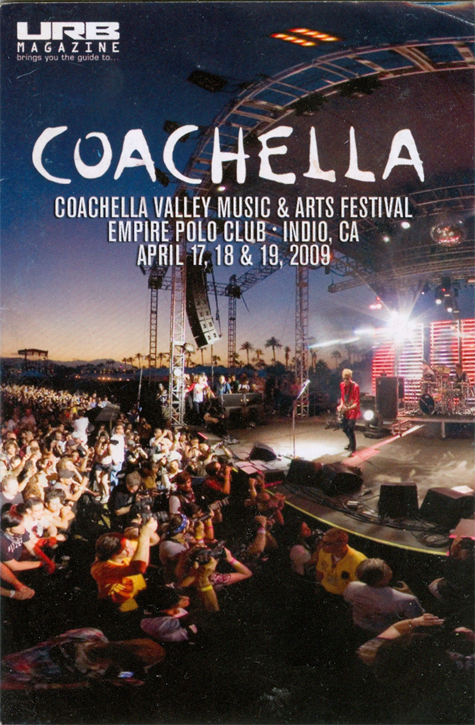
One final Coachella-related post before I shut up about the hot, loud weekend for another fifty-one weeks. At least two versions of the Coachella pocket guide were released this year: one featuring a day shot of the main stage — featuring some so-and-so with long hair and a sea of people listening to him play his guitar — and a second one featuring the Love and Rockets evening show from last year’s concert.


It has been pointed out to me that the second version, pictured above, features my friend York, whose snapped the Coachella photos from both this year’s concert and last year’s — which, in turn, accompanied Aly’s articles for this year’s concert and last year’s.


Sure enough, there he is, wearing a blue bandana and being eyed suspiciously by another shutterbuggery enthusiast immediately north of him in the photo. Makes me wonder if I showed up in any promotional images following my stint in the photo pit a few years back.

Here, by the way, is York’s highlight real.


And way to go on being unconsciously viewed by legions of sweaty-palmed hipsters.